
How to store pellets, firewood and briquettes so your fuel stays dry
Knowing how to store pellets, firewood and briquettes separates a winter of hot, clean fires from one of hissing logs, swollen pellets and wasted money. Fuel leaves our warehouse dry, but damp ground, tight tarps and leaking gutters invite moisture back in to steal the heat you paid for. We have supplied bulk wood fuel across the UK and Europe since 2009 and seen every storage mistake possible. Here is the guidance we give our trade customers.
Why does proper wood fuel storage matter so much?
Correct storage protects heat output, cuts smoke and stops fuel spoiling. Damp pellets, logs and briquettes lose efficiency within days of exposure.
Moisture is the silent thief of wood heating. Water in fuel has to boil off before the wood itself can burn, so every extra percentage point of moisture content is heat lost up the chimney. According to Farmers Weekly, emissions from wet wood are roughly five times higher than from firewood dried to 20% moisture or less. That is why the Ready to Burn scheme, run by Woodsure on behalf of Defra, has applied in England since May 2021: firewood sold in volumes under two cubic metres must be certified below 20% moisture.
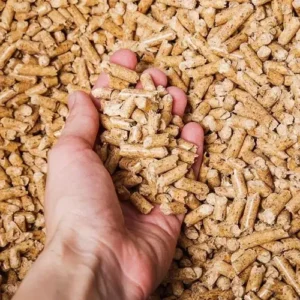
The law protects air quality; storage protects your wallet, because a damp pallet of ENplus A1 certified pellets turns to abrasive dust that blocks boiler augers.
How should you store wood pellets to keep them dry?
Store wood pellets raised on pallets in a dry, ventilated room, away from damp walls and floors. Moisture above ten per cent ruins them.
Wood pellets are compressed to six to ten per cent moisture, the driest and most damp-hungry fuel of all. The ENplus storage guidance is blunt: dry, protected storage is not optional.
Our rules for bagged pellets:
- Keep bags sealed until the moment you need them. The plastic wrap is the moisture barrier.
- Raise every stack on pallets or shelving so ground damp cannot wick upward through concrete.
- Leave a gap between the stack and outside walls, and let a gentle airflow stop humidity pockets from forming.
- Never store pellets outdoors, even under a tarp. Rain, dew, and condensation all find a way in.
For bulk deliveries in tonnes or truckloads, a sealed, ventilated silo or hopper is the professional answer. Planning a bulk pellet setup? Ask us before the first drop arrives.
Where is the best place to store firewood outside?
Store firewood outside, raised off the ground in an open-sided rack with airflow, covering only the top. Bring logs indoors two days before burning.
Firewood behaves differently from pellets: logs still carry moisture that needs to escape, so they want airflow, not sealing. The best setup is an open-sided log store raised at least 15cm off the ground on bearers or pallets. Stack logs bark-side up so rain runs off, keep the ends exposed to the breeze, and cover only the top, leaving the sides open.
“Never stack your firewood next to your stove, chances are it might ignite.” That warning comes from HETAS, the UK body recognised by government for solid fuel safety, which records house fires started by logs stored too close to an ignition source.
A kiln-dried log at under 20% moisture has little left to lose, so it can sit fully covered. Green or partly seasoned wood must keep breathing or it grows mould faster than it dries. Storing to season needs airflow first; storing to preserve needs cover first. For checking your setup, Woodsure’s storage guidance is a solid independent reference.
Order bulk wood pellets, briquettes and firewood for sale online.
We are Cambridgeshire Straw Pellets Limited, a UK bulk wood fuel supplier incorporated in 2009 (company registration number 06928341). From our base in Cambridgeshire we supply wood briquettes, sawdust, wood shavings, charcoal, wood pellets, wood chips and firewood by the tonne or by the truckload to customers across the UK and Europe.
Every fuel we sell arrives dry and ready to burn, and we deliver in the volumes trade customers need: full artic loads, pallet quantities or bulk bags. Our A1 wood pellets meet the ENplus quality standard for moisture and ash, while our Nestro briquettes, RUF briquettes and Pini Kay briquettes compress pure dried timber into a heat output that ordinary logs struggle to match.
Browse the full range in our shop, compare options in our wood pellets category, wood briquettes category and firewood category, or contact our team for a bulk quote in tonnes or truckloads. Storage questions before you order? Our FAQ page covers delivery and handling, and this guide covers everything else.
How do you store wood briquettes the right way?
Store wood briquettes indoors in their original wrapping, off the floor and away from leaks. Damp air makes them swell, crumble and lose heat.
Wood briquettes are already bone dry, often below ten per cent moisture, which flips the firewood logic on its head. As Duffield Timber puts it, briquettes belong indoors in a dry, covered environment and start absorbing moisture as soon as they meet open air. Fitzpatrick Fuels is blunter still: damp briquettes turn back into sawdust.
The practical habits are simple:
- Keep packs in their original shrink wrap, stacked neatly and off the floor.
- Store them in a garage, shed or dry utility room, never outdoors or in a damp outbuilding.
- If a wrap tears in handling, use that pack first and watch for swelling or crumbling, the tell-tale signs of moisture.
Stored well, a pallet of heat logs keeps for years, which is why buying briquettes in bulk before winter pays off.
Which storage mistakes waste the most money?
The costliest mistakes are tight tarps, ground contact, damp storage walls and fuel stacked beside a stove. Each invites moisture, mould or fire.
Every winter we get calls about spoilt fuel, and the causes repeat themselves. Learning how to store pellets, firewood and briquettes well is mostly about avoiding a few repeat offenders. A tarp lashed down on all four sides turns a log stack into a greenhouse. Bags resting on bare concrete drink floor damp for months. Charcoal left in a torn sack refuses to light in spring. And fuel stacked beside a stove, as HETAS warns, is a fire risk.
Our full storage reference:
| Fuel type | Ideal moisture | Where to store it | Covering advice | Shelf life stored well | Most common mistake |
|---|---|---|---|---|---|
| Wood pellets (ENplus A1) | Below 10% | Indoors, sealed, on pallets | Keep bags sealed until use. | 1 to 2 years and beyond | Storing outdoors under a tarp |
| Wood briquettes (Nestro, RUF, Pini Kay) | Below 10% | Indoors in original wrap | Keep shrink wrap intact. | Several years | The torn wrap is left unrepaired. |
| Kiln-dried firewood | 20% or less | Outside, raised, open-sided rack | Covered top only, sides open | Around 1 year before quality dips | The tarp is sealed on all four sides. |
| Seasoning firewood | Aiming for 20% | Outside, raised, full airflow | Top cover only, gaps on sides | Season for 6 to 24 months | No airflow under the stack |
| Charcoal and BBQ briquettes | Keep dry. | Sealed bin or airtight container | Airtight lid after every use | Years if kept dry | A damp sack left open in a shed |
| Wood chips | Below 25% for burning | Covered, ventilated bay | Roofed bay with open sides | Weeks to months | Sealed pile that self-heats |
| Sawdust and wood shavings | Keep dry. | Dry internal store, bagged | Sealed bags off the floor | Months | Contact with damp floors |
When should you order bulk wood fuel for winter?
Buy bulk wood fuel in late summer or early autumn. Prices sit lower, supply stays steady and you gain dry months before the cold.
The best storage cannot help fuel ordered too late. We advise placing bulk orders between July and early October, while stock is deep and there is time for fuel to settle into storage before the first frost.
Our about page explains how we handle bulk supply in tonnes and truckloads, and our shop lists current stock. That is the method in full: order early, store pellets, firewood and briquettes dry, and burn clean all winter.
Key takeaways
- Moisture is the only enemy. Every rule in this guide exists to keep water away from fuel.
- Pellets want sealing, firewood wants airflow, and briquettes want the wrap left alone.
- Raise everything off the ground on pallets or bearers.
- Cover the top of a log stack only, never the sides.
- Order bulk fuel in late summer to give storage months of dry weather.
Can wood pellets be stored outside?
No. Wood pellets absorb moisture fast, so outdoor storage causes swelling, dust and boiler faults. Keep them indoors, sealed and off the ground.
How long do wood briquettes last in storage?
Kept dry in original wrapping; briquettes last for years. Once the wrap is torn, use the pack within a few weeks and check for swelling.
What moisture content should firewood have before burning?
Ready-to-burn firewood must hold 20% moisture or less. Wet wood produces about five times more smoke than properly dried logs.
Is it safe to store firewood next to a stove?
No. Firewood stacked beside a stove can ignite, and UK safety bodies warn several house fires have started exactly this way.
Do charcoal and wood chips need special storage?
Charcoal needs a dry, sealed container, and wood chips need covered, ventilated bays so they do not compost, heat or grow mould.
References
- ENplus guidance on storage for wood pellets
- HETAS advice on log storage and stove safety
- HETAS explanation of the Ready to Burn scheme
- Woodsure wood storage guidance
- Farmers Weekly on firewood moisture rules and emissions
- Duffield Timber on storing and using wood briquettes
- Fitzpatrick Fuels: on how to store briquettes
How to store wood pellets, how to store firewood outside, how to store wood briquettes, bulk firewood storage in the UK, and the best way to store pellets
Last updated: October 2026