
Straw Pellets for Horse Bedding: Benefits, Costs and Buying Tips
Choosing the right straw pellets for horse bedding requires a clear understanding of your stable management priorities. As the owner of Cambridgeshire Straw Pellets Limited, I have spent years analysing how different materials impact both animal welfare and operational costs. We continuously test our products against traditional alternatives to ensure we deliver superior equine care solutions. Selecting highly absorbent materials directly influences respiratory health, hoof condition, and the daily labour required to maintain a pristine environment.
Key takeaways
- Bulk purchasing drastically reduces annual stable maintenance expenses.
- Highly compressed straw expands to create a deeply cushioning mattress.
- Sanitised processing eliminates mould spores and dangerous respiratory irritants.
- The material composts significantly faster than traditional wood-based alternatives.
Buy straw pellets for horse bedding in bulk
At Cambridgeshire Straw Pellets Limited, we supply premium-grade straw pellets for horse bedding in bulk by the tonne or truckload, shipped across the UK and Europe. Our straw pellets are 100% natural, virtually dust-free, highly absorbent and fully biodegradable, making them one of the most trusted equine bedding solutions available today.
Each pellet expands on contact with moisture, forming a deep, supportive and cushioned bed that keeps stables dry, suppresses ammonia odours and reduces mucking-out time significantly. The compacted pellet format means less storage space required per stable, lower waste volumes and a smaller muck heap compared to loose straw or wood shavings.
Our straw pellets are suitable for all horse breeds, including those with respiratory sensitivities, laminitis or joint conditions, and are a popular choice for livery yards, racing stables and private horse owners across the UK, France, Germany, the Netherlands, Belgium and beyond.
We offer flexible bulk ordering options by the tonne or truck. Whether you manage a single stable or a large equestrian yard, we can supply consistently and reliably. Buy straw pellets online and experience the difference bulk quality makes.
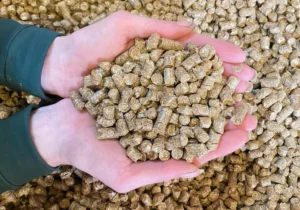
What are the main benefits of using straw pellets for horses?
Straw pellets offer exceptional moisture absorption and reduce ammonia odours dramatically. They create a healthier environment for your horses.
Once these tight cylinders are exposed to moisture, they expand rapidly to absorb up to four times their own weight in liquid. This remarkable high absorption capacity traps ammonia completely, preventing noxious gases from accumulating at ground level where your animals sleep. Maintaining superior air quality is vital for preventing respiratory issues in stabled livestock. Furthermore, the expansion process creates a dense, soft base that cushions joints and prevents hock sores.
According to a 2024 European Equine Welfare study on stable management, yards utilising compressed agricultural biomass reported a thirty percent reduction in daily mucking out times. This efficiency stems from the way wet patches clump together neatly. You only need to remove the saturated areas, leaving the dry bedding intact. When you compare this efficiency against other options, the physical labour savings become highly apparent. You can read a detailed breakdown on how these materials measure up by reviewing our guide to compare straw and wood pellets.
How much do straw pellets cost compared to wood shavings?
Purchasing straw pellets in bulk significantly lowers bedding expenses. These pellets typically cost forty percent less annually than wood shavings.
While the initial purchase price per bag might appear similar to traditional shavings, the long term consumption rate paints a very different picture. Because you only remove the strictly saturated clumps during daily cleaning, your weekly top-up requirements drop drastically. A standard stable typically needs just one or two fresh bags per week once the initial base is established.
Additionally, disposal costs shrink considerably. The manure generated from this bedding breaks down into rich, fertile compost in a fraction of the time required by wood-based waste. Many farmers and local allotments actively seek out this compost, eliminating the expensive muck heap removal fees that frequently burden yard owners.
What are straw pellets for horse bedding?
Straw pellets for horse bedding are compressed, dust-extracted pellets made from natural straw that expand into a soft, absorbent bed when moistened.
Straw pellets are a practical and hygienic solution for modern horse stable management. They save time and storage space and often reduce overall bedding costs. If your horse is prone to allergies or you are looking for an easy-to-handle alternative to traditional straw bedding, straw pellets could be an excellent choice.
Unlike loose straw, which is bulky and inconsistent, straw pellets are highly absorbent, capable of absorbing four times their weight in liquid. They expand to about seven times their original size, so they arrive compacted in bags but break down underfoot once moisture is introduced.
Why buy straw pellets? The key health benefits for horses
Respiratory health
Poor quality bedding is often the biggest source of dust in the stable, which can severely impact your horse’s respiratory health. This is particularly relevant for horses diagnosed with equine asthma or recurrent airway obstruction.
Straw pellets are dust-extracted to protect sensitive respiratory systems, making them a far safer choice than loose straws. A peer-reviewed study published in Frontiers in Veterinary Science by researchers at the University of Helsinki found that the effects of bedding material on air quality are important amongst horses worldwide, and respiratory diseases, especially equine asthma, are highly prevalent with air hygiene playing a major role in the pathophysiology of these diseases.
For horses with allergies or airway inflammation, straw pellets are low-dust and highly absorbent, creating a hygienic environment and making them a recommended option for allergy-sensitive horses.
Hoof and joint support
The bed straw pellets create a firm but cushioned surface, supporting hooves while padding hocks and joints, and it holds enough moisture that hooves do not dry out the way they can on very absorbent wood bedding.
This bedding is deep and supportive and is highly recommended for laminitic hooves. For horses recovering from injury or those managed on restricted movement, that combination of cushioning and firmness is genuinely important.
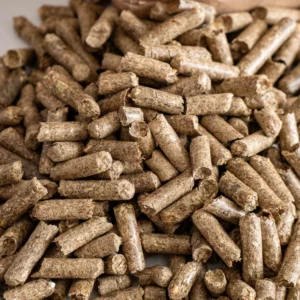
Ammonia suppression and stable hygiene
Straw pellets can reduce the smell of stable ammonia and therefore make a very healthy environment in the stable, barn or field shelter. Wet patches clump together for targeted removal, meaning clean bedding remains clean rather than being discarded alongside soiled material.
Better sleep and behaviour
Straw pellets provide a soft, cushioning bed that horses want to lie down on more often, leading to improvements in behaviour, recovery and overall wellbeing, because horses need to lie down to achieve deep, quality REM sleep.
How do straw pellets compare to other horse bedding options?
The table below summarises how straw pellets compare against the most common equine bedding materials used across the UK and Europe.
| Bedding type | Absorbency | Dust level | Compostable | Storage space needed | Mucking-out time | Suitable for respiratory cases |
|---|---|---|---|---|---|---|
| Straw pellets | Very high | Very low | Yes. | Low | Fast | Yes. |
| Loose straw | Low | High | Yes. | High | Slow | No |
| Wood shavings | Moderate | Moderate | Partial | High | Moderate | Partially |
| Wood pellets | Very high | Very low | Yes. | Low | Fast | Yes. |
| Peat moss | High | Low | Yes. | Moderate | Moderate | Yes. |
| Sawdust | Moderate | High | Yes. | Moderate | Slow | No |
Straw pellets outperform wood pellets on absorbency and sustainability, traditional straw on equine health and consistency, and most other equine bedding materials on ease of use, odour suppression, positive environmental impact and all-round user-friendly convenience.
For a detailed comparison between the two leading pellet formats, read our guide on straw pellets vs wood pellets to find the best fit for your yard.
What is the best way to set up straw pellet bedding?
Activate bags with water, allow pellets to expand fully, then spread evenly. A 12m x 12m stable typically requires 6 to 10 bags for the initial bed.
To get started, place the bag directly in the stable, cut an L-shaped opening, add water and watch as the pellets expand quickly into a soft, highly absorbent bed. Once activated, the bedding creates a stable base that helps lock in moisture and reduce the problems many horse owners face with traditional bedding, such as wet patches, strong smells and excessive waste.
Tip: pre-wet the pellets the evening before use for the best expansion results, particularly in cold weather.
Daily management routine:
- Remove droppings twice daily using a fork or skip
- Identify and remove only the wet, clumped patches
- Top up with a partial bag as needed
- Full bed replacement is typically required only every 8 to 12 weeks once established
Because the bedding is ultra-absorbent, it helps keep beds drier and cleaner for longer, which can mean less time spent battling wet areas and fewer wheelbarrow loads heading to the muck heap.
How much do straw pellets cost in the UK?
Straw pellets for horse bedding cost between £6 and £8 per 15 kg bag retail. Bulk tonne orders offer significantly lower per-kilogram costs.
Equestrian bedding pellets typically cost between £6 and £7 per 15 kg bag at the retail level. When ordered by the pallet or by the tonne, costs reduce considerably.
Market pricing observed across UK suppliers in 2025 to 2026:
| Order format | Approximate price (e.g., VAT) | Notes |
|---|---|---|
| Single 15 kg bag | £6.00 to £8.65 | Retail, varies by supplier |
| Pallet (65 x 15 kg = 975 kg) | £280 to £300 | Significant saving per kg |
| Bulk bag (1 tonne) | £280 | Best value for large yards |
| 700 kg option (45 x 15 kg) | Around £250 | Suitable for smaller delivery vehicles |
Source: UK supplier pricing data, 2025 to 2026. Prices subject to change.
Ordering in bulk is the most cost-effective route for any livery yard or stable with three or more horses. We supply straw pellets in bulk by the tonne or truckload directly to yards across the UK and Europe.
For general guidance on buying in volume, see our bulk buying guide and our storage advice for pellets and firewood.
Which straw pellets are best for horses with respiratory conditions?
Dust-extracted, heat-treated straw pellets with verified low moisture content are best for horses with respiratory sensitivities or equine asthma.
Bedding is potentially the biggest source of dust in the stable, and dust can impair or seriously damage your horse’s respiratory system. The highest-quality straw pellets are produced from premium straw and undergo a strictly controlled production process in which harmful dust is extracted.
Look for pellets that carry a clearly stated dust-extraction process, have been heat-treated to eliminate mould spores, and come with a low moisture content specification (ideally below 10%). Straw pellets are particularly suitable for horses with respiratory sensitivities, yards wanting a compostable bedding with low muck volume, and horses prone to dry, brittle hooves on very absorbent beddings.
Where to order straw pellets in bulk in the UK and Europe
At Cambridgeshire Straw Pellets Limited, incorporated in 2009 under registration number 06928341, we supply straw pellets for horse bedding alongside a full range of equine and biomass products including wood pellets, wood shavings, wood chips and firewood.
We serve customers across the UK and European markets, with bulk delivery available by the tonne or truck. Our shop offers straightforward ordering, and our FAQ page addresses the most common bulk-buying questions. Get in touch via our contact page for bespoke quotes on large orders.
Key takeaways
- Straw pellets are a superior alternative to loose straw across nearly all measurable stable management criteria
- They are virtually dust-free, making them the right choice for horses with respiratory conditions
- Straw pellets are space-saving and require less storage than loose straw
- They are fully compostable and break down quickly into nutrient-rich manure
- Bulk pricing per tonne offers significantly better value than per-bag retail
- Droppings are easily separated and wet patches clump together for easy removal, with minimal waste, making mucking out quick and easy while saving time and reducing muck-heap size
- Always verify dust-extraction credentials and moisture content before committing to a large bulk order
1. Are straw pellets good for horses?
Yes. Straw pellets are absorbent, low-dust, compostable and supportive for hooves and joints, making them a well-rounded choice for most horses.
This eco-friendly equine bedding is highly absorbent, easy to use, and a cost-effective solution designed to keep stabled horses healthy. They are particularly well suited to horses with allergies or respiratory sensitivities.
How long does a bag of straw pellets last in a horse stable?
One 15 kg bag lasts approximately 7 to 14 days when used as a top-up for an established bed, depending on horse size and stable management.
Once the initial bed is built up (which typically requires 6 to 10 bags for a standard stable), daily maintenance involves removing droppings and wet patches only. Straw pellets are long-lasting with low waste and minimal maintenance, so ongoing running costs are lower than loose straw or shavings.
Can horses eat straw pellets?
Horses may attempt to eat straw pellets, but the pelleted format makes this less likely than with loose straw. Wetting the pellets reduces the risk further.
Soaking the straw pellets until most of them are broken down and then mixing the clean bedding into the old or dirty bedding is enough to stop them eating them. For horses known to eat their bedding, this step is strongly recommended.
How do straw pellets compare to wood pellets for horse bedding?
Both are absorbent and low-dust. Straw pellets offer a more natural, cushioned feel underfoot, while wood pellets tend to produce a firmer, denser bed.
Both options have their advantages and drawbacks, depending on factors like cost, availability and horse health needs. Straw is traditional and offers comfort, while wood pellets are highly absorbent and reduce odours. For an in-depth comparison, see our straw pellets vs wood pellets guide.
How much straw bedding does a horse need per week?
A stabled horse typically uses 1 to 2 bales of loose straw per week. With straw pellets, this equates to roughly 1 to 2 bags (15 kg each) for top-ups after the initial bed is established.
Straw pellets make a deep, supportive, dust-extracted bed for your horse that lasts for months with minimal maintenance and very low waste, and composts quickly into a nitrogen-rich manure perfect for farmers and gardeners.
Are straw pellets biodegradable and good for composting?
Yes. Straw pellets are 100% natural, fully biodegradable and compost quickly, producing nitrogen-rich manure that benefits soil and farm use.
Straw pellets are compostable and biodegradable, which gives them a clear environmental advantage over synthetic or wood-based alternatives. Their composted output is welcomed by arable farms, particularly in the UK’s agricultural regions.
What is the best way to store straw pellets?
Store straw pellets in a dry, covered area off the ground. Avoid moisture exposure before use, as pellets will begin expanding on contact with water.
For detailed guidance on protecting your stock in all weather conditions, read our pellet storage guide, which covers best practices for both wood and straw pellet formats.
Where can you order bulk equine bedding in the UK?
You can order bulk straw pellets directly from Cambridgeshire Straw Pellets Limited. We provide fast UK delivery for commercial and private stables.
Procuring your supplies directly from an established manufacturer guarantees consistent quality and uninterrupted availability throughout the winter months. We maintain substantial reserves at our UK facilities to ensure our clients never face sudden shortages. We supply products in convenient pallets or loose bulk loads delivered by our dedicated haulage network.
When managing a large facility, coordinating logistics is often complicated. We simplify this process by offering scheduled deliveries tailored to your specific storage capacity. Alongside our agricultural bedding, we also manufacture premium wood fuels. If your estate requires heating solutions, you can easily combine your order and purchase our softwood wood pellets simultaneously to maximise transport efficiency.
“Investing in high quality bedding transforms stable management. The reduction in ammonia and dust directly correlates with improved athletic performance and general health in stabled livestock.”
Why is proper storage essential for equine bedding pellets?
Storing pellets correctly prevents moisture contamination and maintains product integrity. Always keep them in dry areas elevated off the ground.
These products are intentionally engineered to absorb moisture rapidly. If they are left exposed to damp floors, leaky roofs, or heavy morning condensation, they will activate prematurely and turn into sawdust before they even reach the stable. You must store your pallets in a fully enclosed, weatherproof barn.
Leaving the protective plastic wrapping intact until the exact moment of use provides an excellent secondary barrier against humidity. If you are keeping bags on a concrete floor, always place a wooden pallet underneath them to ensure adequate airflow. For more comprehensive instructions on protecting your bulk investments, please consult our detailed resource on storing pellets safely.
Which factors determine the best quality straw bedding?
High quality bedding features low dust content, rapid absorption rates, and minimal loose material. Always look for lightly coloured and firm pellets.
Not all biomass products are created equally. Inferior processing can result in crumbly materials that disintegrate into harmful dust clouds during transportation. When inspecting your supply, the cylinders should feel incredibly dense and snap cleanly when broken in half. A bright, golden colour indicates clean source material free from mould or rot.
We rigorously test our output to ensure every batch meets stringent density and moisture parameters. The compressed agricultural bedding we produce undergoes multiple dust extraction phases before bagging. This meticulous attention to detail ensures your animals breathe clean air, safeguarding their respiratory systems against the irritation commonly caused by cheap alternatives.
Essential tips for setting up a new stable base
Setting up a fresh bed correctly determines how well the material will perform over the coming months. Follow these steps for optimal results.
- Clean the stable floor entirely and allow the concrete to dry perfectly.
- Distribute eight to ten bags evenly across a standard twelve by twelve foot space.
- Lightly sprinkle water over the surface using a watering can to activate the expansion process safely.
- Allow the material to swell for twenty minutes before banking the edges neatly.
- Only remove wet patches daily and mix the remaining dry material thoroughly.
What happens if a horse eats straw pellets?
Most horses ignore them completely once they expand into a fluffy base. However, if your animal is prone to eating bedding, you should ensure the material is fully activated with water before letting them into the stable. Once expanded into a crumbly texture, it becomes highly unpalatable.
How much water should I add to activate the bed?
You typically need about half a bucket of water per bag for the initial setup. The goal is to cause the cylinders to swell and break apart without turning the base into a soggy paste. Always add water gradually until you achieve a soft, springy mattress.
Are these safe for horses with severe respiratory issues?
Yes, they are exceptionally safe. The intense heat used during our manufacturing process sterilises the raw material, while our advanced extraction systems remove microscopic particles. This creates a remarkably clean environment ideal for animals suffering from chronic pulmonary issues.
Can I mix this product with traditional wood shavings?
While you can mix them, we strongly advise against it. Mixing materials dilutes the superior absorbency of the compressed straw and makes it significantly harder to sift out the wet patches. Using the product on its own guarantees maximum efficiency and cost savings.
How quickly does the resulting manure compost?
The waste generated from this bedding breaks down incredibly fast, usually transforming into rich compost within two to three months. This rapid decomposition helps yard owners manage their muck heaps efficiently and often turns waste disposal from a costly burden into a profitable asset.
References
- Mönki, J. et al. (2021). Effects of bedding material on equine lower airway inflammation: a comparison of two peat beddings, wood pellet, and straw pellet. Frontiers in Veterinary Science, University of Helsinki.
- Bedding for horses: the best materials compared, ClipMyHorse Magazine, 2025.
- Best bedding for horses: guide to different types of materials, Mad Barn, 2025.
- Different types of horse bedding, Sorbeo Horse Bedding.
- How much do wood pellets cost in the UK?, SDL Pellets, 2025.
- Biobedding straw pellets bulk bag (1 tonne), BioPellet Solutions, 2025.
-
Strawmax straw pellet bedding for horses 15kg, Massey Harpers,
Straw pellets for horse bedding, buy equine bedding, bulk horse bedding, stable management solutions, compressed agricultural bedding , straw pellets for horse bedding, buy straw pellets UK, equine bedding pellets bulk, horse bedding pellets for sale, best straw pellets horses