What are straw pellets used for? A complete guide for UK and European buyers
Straw pellets are one of agriculture’s most versatile by-products. Made from compressed wheat, barley, or oat straw, they serve as premium horse bedding, biomass heating fuel, animal feed, garden mulch, and industrial energy input, all from a single, 100% natural material. At Cambridgeshire Straw Pellets Limited, we have supplied bulk straw pellets across the UK and Europe since 2009. If you have ever asked what straw pellets are used for, this guide answers that question in full, backed by verified data and our own operational expertise.
Buy straw pellets in bulk: the smart, sustainable choice
Straw pellets are compressed, high-density pellets made from 100% natural agricultural straw, including wheat, barley, and oat straw, with zero additives and minimal dust content. At Cambridgeshire Straw Pellets Limited, incorporated since 2009 (registration number 06928341), we supply straw pellets online in bulk quantities, by the tonne or full truck, to clients across Europe and the UK.
Our straw pellets serve multiple purposes: premium horse and livestock bedding, biomass heating fuel, animal feed supplementation, and garden mulch and composting. They are 100% biodegradable, highly absorbent, virtually dust-free, and fully compostable into nutrient-rich fertiliser after use.
Whether you manage a livery yard, a poultry operation, a biomass heating plant, or a residential heating system, our straw pellets offer outstanding value, consistent quality, and reliable bulk supply. Supplied by tonne or truck, they are ideal for farms, equestrian centres, industrial facilities, and households alike.
Contact us today via our shop or visit our FAQ page to learn more about ordering, delivery, and bulk pricing across the UK and Europe.
What are straw pellets, exactly?
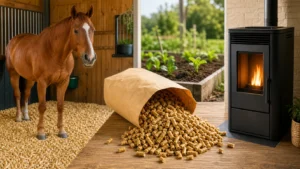
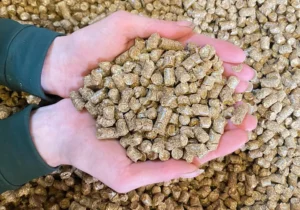
Straw pellets made from corn stalks, wheat straw, and rice straw can be used as fuel pellets, animal bedding, and animal feed and are produced with less ash content and high calorific value. The pelleting process compresses raw straw under high pressure and heat, binding the fibres without any chemical additives. The result is a compact, dense pellet that is far easier to store and transport than loose straw.
Pelleting of straw increases bulk density, improving storability and reducing transportation costs. That efficiency benefit alone makes bulk straw pellets far more practical for large-scale buyers, including equestrian yards, poultry farms, and biomass energy operators.
Best uses for straw pellets: a quick-reference table
| Application | Key benefit | Who uses them |
|---|---|---|
| Horse and livestock bedding | Ultra-absorbent, low dust, ammonia control | Equestrian centres, livery yards, farms |
| Biomass heating fuel | Renewable, carbon-neutral energy source | Residential, industrial, and power stations |
| Animal feed supplement | Natural fibre source, easy to store | Cattle, sheep, poultry operations |
| Garden mulch and composting | Breaks down into nitrogen-rich fertiliser | Smallholdings, allotments, horticulture |
| Industrial co-firing | Renewable fuel blended with coal or biomass | Power plants, manufacturing facilities |
| Cat and small pet litter | Highly absorbent, odour-controlling | Pet owners, animal shelters |
Why buy straw pellets for horse bedding in the UK?
Horse bedding is where straw pellets have built their strongest reputation in the UK market, and for good reason.
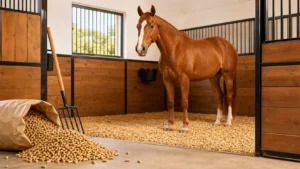
Many horse owners report that stables bedded with straw pellets are noticeably cleaner and have significantly reduced ammonia odour. Straw pellets are especially popular for horses with allergies or respiratory sensitivities.
The pellets are highly absorbent and can absorb four times their weight in liquid. They expand to about seven times their size, so they are compacted, meaning a 15 kg bag expands with moisture and breaks down underfoot.
With the ability to soak over 600% of their own weight within 15 minutes, straw pellets absorb larger amounts of water than any other form of horse bedding, including wood pellets.
This absorbency directly translates into practical, financial, and welfare benefits for horse owners:
- Faster, easier mucking out
- Smaller muck heaps
- Significantly reduced ammonia levels in the stable
- Healthier respiratory environment for horses and handlers
- Fully compostable waste that breaks down into rich fertiliser
The bed is firm but cushioned, supporting hooves while padding hocks and joints, and it holds enough moisture that hooves do not dry out the way they can on very absorbent wood bedding. It is dust extracted for respiratory health, fully compostable, and breaks down quickly into nutrient-rich manure.
For equestrian buyers, you can read our dedicated resource on straw pellets for horse bedding and compare options on our straw pellets vs wood pellets guide.
How do straw pellets work as biomass fuel?
Straw pellets as fuels are usually burnt in pellet boilers, pellet stoves, and other pellet appliances at the household level. Large-scale straw pellets are co-fired with traditional fuels such as coal, oil, and others at large-scale boilers, power plants, or factories.
Straw pellets usually have a lower calorific value than wood pellets but still deliver usable energy, typically around 14 to 18 MJ/kg depending on crop type. According to a 2022 peer-reviewed study published in PMC, the calorific value of wheat straw pellets reaches approximately 22.19 MJ/kg under specific processing conditions, confirming their viability as a serious fuel source.
The energy contained in straw is highly concentrated, giving a fuel with very good energy qualities as well as minimal amounts of ash. The ash from burning pellets can be used as a mineral fertiliser because of its high content of elements vital for plant growth.
Pellet fuel made from crop straw is burnt in a special gasification boiler with a thermal efficiency of 81%. The emission of CO₂ and SO₂ is near zero. It can replace non-renewable fuels such as coal and oil and reduce the impact of waste on the environment.
From a regulatory standpoint, the European Union’s Renewable Energy Directive mandates that 42.5% of energy consumption derive from renewable sources by 2030, creating regulatory tailwinds for biomass fuel applications. Straw pellets sit squarely within this renewable energy framework, making them an increasingly strategic purchase for European industrial and residential buyers.
Demand is likely to rise as biomass pellets support decarbonisation across heating and power systems. Industrial users are expected to prefer pellets that offer stable calorific value and lower moisture content.
Where do straw pellets fit into the European energy market?
Europe remains the leading region for straw pellets, supported by strong policy incentives and advanced infrastructure, while Asia Pacific and North America show rapid expansion due to growing agricultural output and new bioenergy initiatives.
Individual household pellet stove systems burn 3 to 6 tonnes annually at heating costs approximately 40% below fossil fuel alternatives. For European buyers looking to reduce energy costs while meeting sustainability commitments, bulk straw pellets delivered by truck or tonne offer a clear and measurable advantage.
Wheat straw, barley straw, and oat straw have historically been burnt or left in fields, but modern industrial processing now converts these materials into engineered fuel products and animal bedding solutions.
We supply straw pellets in bulk to clients across Europe. Visit our buying wood pellets in bulk guide for detailed information on volume ordering, or browse our shop for current product listings.
Which animals benefit from straw pellet bedding?
Straw pellets can be used as animal bedding, animal feed, and heating fuel for household and industrial use. Beyond horses, the range of animals that benefit from straw pellet bedding is broader than most buyers realise:
- Horses and ponies, including those with laminitis or respiratory conditions
- Cattle and sheep, where ammonia control supports respiratory health
- Poultry, where poultry operations raising 26 billion birds annually represent the largest agricultural bedding market, with broiler facilities and layer operations increasingly standardising on pelleted systems.
- Pigs, particularly farrowing houses, where dry, clean flooring is critical
- Cats and small domestic pets, where the natural absorbency controls odour without chemical additives
- Rabbits and guinea pigs, where dust-free bedding protects sensitive respiratory systems
Livestock operations managing large numbers of cattle, swine, and poultry require bedding material, and straw pellets offer superior moisture management and ammonia reduction compared to traditional shavings.
How to store straw pellets correctly
Proper storage protects your investment and maintains pellet quality. Key points include:
- Store in a dry, covered location away from direct moisture
- Keep bags off the ground on pallets or wooden boards to prevent damp absorption
- Avoid direct sunlight, which can degrade the pellet structure over time
- For bulk deliveries by truck, ensure a sheltered storage area is available before delivery
For a full breakdown, visit our dedicated ‘How to Store Pellets and Firewood’ guide.
Key takeaways
- Straw pellets are 100% natural, additive-free, and biodegradable
- They absorb up to 600% of their own weight in liquid, outperforming most competing bedding materials
- As a biomass fuel, they deliver 14 to 22 MJ/kg of energy depending on straw type and processing
- The EU’s 2030 renewable energy targets are actively driving demand for straw pellets as a heating fuel
- They compost rapidly into nitrogen-rich fertiliser, completing a fully circular agricultural cycle
- We at Cambridgeshire Straw Pellets Limited supply in bulk (by tonne or truck) to the UK and Europe
What are straw pellets used for?
Straw pellets are used for horse bedding, livestock bedding, biomass heating fuel, animal feed, garden mulch, and small pet litter across residential, agricultural, and industrial settings.
Are straw pellets better than wood pellets for horse bedding?
Straw pellets do not need watering like the wood variety, are ultra-absorbent at up to 400% by weight and twice as effective as wood pellets, are softer, non-slip, and healthier, and bind the smell of ammonia far better.
How many straw pellets do I need for a horse stable?
The quantity depends on stable size and the horse’s habits, but most UK equestrian sources suggest starting with 3 to 5 bags (15 kg each) for initial bed setup, with ongoing top-ups of 1 to 2 bags weekly. Buying in bulk by ton or truck, as we offer at Cambridgeshire Straw Pellets Limited, significantly reduces the cost per bag.
Can straw pellets be used as fuel in a standard pellet stove?
Straw pellets are mostly used for co-firing in industrial boilers, rural heating, or small-scale power generation. For domestic pellet stoves, check your appliance manufacturer’s guidelines, as some stoves require pellets to meet specific ash content and diameter standards.
Are straw pellets environmentally friendly?
Yes. The market benefits from increased collaboration across the value chain, emerging applications in animal bedding and bioplastics, and continued research into enhancing pellet durability and sustainability. Straw pellets are fully biodegradable, carbon-neutral when burned, and the spent bedding composts into agricultural fertiliser, meaning nothing goes to waste.
Where can I buy straw pellets in bulk in the UK?
You can buy straw pellets online directly from us at Cambridgeshire Straw Pellets Limited. We supply by ton or truck across the UK and Europe. Visit our shop or contact us for bulk pricing and delivery options. You can also read more on our blog for buying and storage guides.
straw pellets for horse bedding, buy straw pellets UK, straw pellets uses, straw pellets biomass fuel, bulk straw pellets Europe
References
- Credence Research, Straw Pellets Market Size, Growth, Share and Forecast 2032, credenceresearch.com — Straw Pellets Market Report
- DataIntelo, Straw Pellets Market Outlook 2025–2034, dataintelo.com — Global Straw Pellets Market
- PMC / National Institutes of Health, Life Cycle Environmental Sustainability and Cumulative Energy Assessment of Biomass Pellets Biofuel, pmc.ncbi.nlm.nih.gov — Full study
- ACS Omega, Influence of Biomass Pellet Composition on Particulate Matter, pubs.acs.org — Full study
- Future Market Insights, Europe Biomass Pellets Market 2025–2035, futuremarketinsights.com — Europe Biomass Pellets Market
- Clip My Horse Magazine, Bedding for Horses: The Best Materials Compared, magazine.clipmyhorse.tv — Full comparison
- Horse and More, Concord Equestrian Straw Pellets, horseandmore.co.uk — Product page
Last updated: October 2026 | Published by Cambridgeshire Straw Pellets Limited