What are straw pellets? Uses, benefits & how they’re made
Straw pellets are a compressed, high-density biomass product made from agricultural straw residues. They are used widely across Europe and the UK for horse bedding, biomass heating, soil improvement, and animal feed supplementation. At Cambridgeshire Straw Pellets Limited, incorporated since 2009, we have supplied these versatile pellets in bulk to commercial buyers, equestrian yards, and energy operators across the continent. This guide covers everything you need to know before you order.
What are straw pellets, exactly?
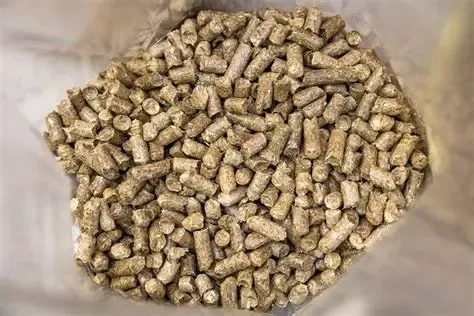
Straw pellets are cylindrical, compressed units made from dried cereal straw, typically wheat, barley, or rice, formed under pressure without chemical binders.
Through modern processing technology, agricultural straw is converted into efficient and clean straw pellets, widely used as fuel, animal feed, and gardening material. The result is a product that is far easier to handle, store, and transport than loose straw bales, with a fraction of the volume and significantly higher energy and absorbency performance.
Straw contains nitrogen, phosphorus, potassium, calcium, and other organic substances, with crude fibres making up 30 to 40 per cent of its composition. That natural fibre structure is what gives straw pellets their remarkable absorption and structural integrity.
How are straw pellets made?
Straw pellets are made by drying raw straw to 12 to 16 per cent moisture, milling it into fine fibres, then compressing it through a pellet die at high pressure.
The production process follows a consistent sequence:
- Collection and baling of cereal straw after harvest
- Drying to the correct moisture level
- Hammer milling to reduce particle size
- Pelletising through a ring-die or flat-die pellet press
- Cooling to stabilise the pellet structure
- Dust extraction and screening to remove fines
- Bagging or bulk loading for distribution
The ideal production specification targets 12 to 16 per cent moisture content and a pellet size of 3 to 5 mm for optimal performance. No adhesives or chemical additives are required, as the natural lignin within the straw fibres binds the pellet together under heat and pressure.
Pelletising increases the bulk density of raw straw, making transportation significantly more efficient. This is one of the core reasons that commercial buyers across Europe prefer bulk straw pellets over loose bales, particularly for large-scale operations.
What are straw pellets used for?
Straw pellets are used for horse bedding, livestock housing, biomass heating, soil amendment, animal feed, and poultry litter management.
The uses for straw pellets include horse, farm, poultry, and small animal bedding, cat litter, and mushroom growing. Below is a structured overview of the primary applications:
| Application | Details | Key Benefit |
|---|---|---|
| Horse bedding | Stable and yard use | Ultra-absorbent, dust-free, supports respiratory health |
| Poultry and livestock litter | Farms and barns | Controls ammonia, reduces odour |
| Biomass heating | Boilers, stoves, power plants | Carbon-neutral, 3,500 to 4,500 kcal/kg calorific value |
| Soil improvement | Gardens and agricultural land | Improves structure and water retention |
| Animal feed supplement | Ruminants and livestock | Fibre source for digestive health |
| Cat litter | Domestic use | Biodegradable and odour-absorbing |
| Mushroom cultivation | Commercial growing | Organic substrate |
| Composting | Post-use waste management | Breaks down into nitrogen-rich manure |
Why are straw pellets the best choice for horse bedding in the UK?
Straw pellets are the best horse bedding option because they are dust-extracted, ultra-absorbent, and compostable, outperforming both loose straw and wood pellets.
Straw pellets outperform wood pellets on absorbency and sustainability, traditional straw on equine health and consistency, and most other equine bedding materials on ease of use and odour suppression.
Dust-extracted and heat-treated straw pellets actively support equine respiratory health, which is a critical concern for horses kept in enclosed stables, particularly those with conditions such as equine asthma or RAO (recurrent airway obstruction).
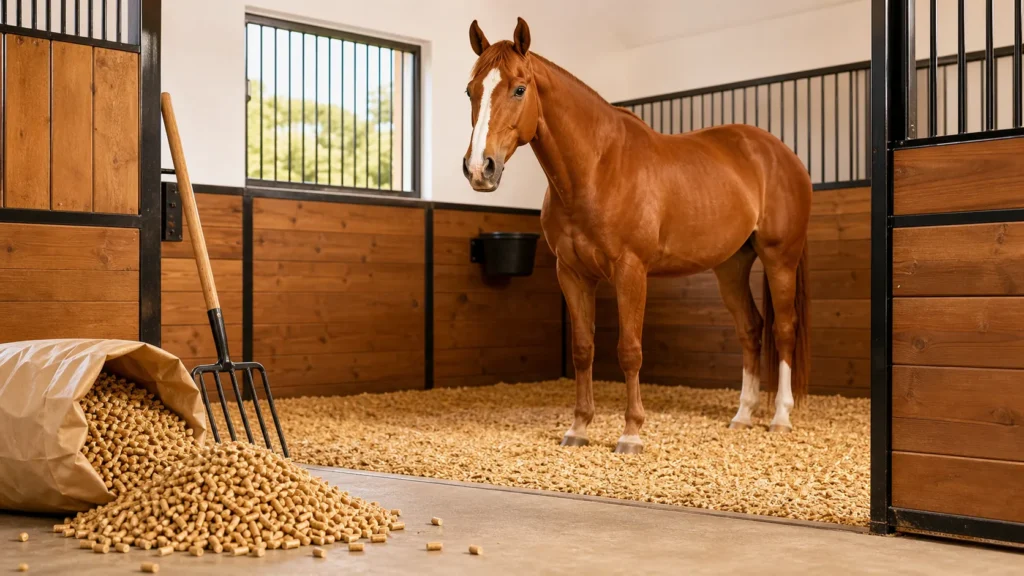
The highly absorbent pellets quickly lock away moisture and urine beneath the bedding surface, helping to keep stables drier and reducing exposure to ammonia.
The pellets are designed to expand and fluff up for a deep bed that encourages horses and ponies to lie down, while providing supporting cushioning for their hocks and joints.
After use, the spent bedding composts quickly. Straw pellets compost exceptionally fast into a nitrogen-rich manure perfect for farmers and gardeners.
For a deeper comparison, read our guide on straw pellets vs wood pellets and our detailed article on straw pellets for horse bedding.
Buy straw pellets in bulk, direct from the UK
At Cambridgeshire Straw Pellets Limited, we supply premium-quality straw pellets in bulk tonnage and full truckloads across the United Kingdom and Europe. Our straw pellets are produced from 100% natural agricultural straw, compressed under high pressure into uniform, dense pellets without the use of any chemical binders or additives.
These pellets are ultra-absorbent, low-dust, and carbon-neutral, making them a trusted choice for horse owners, livery yards, poultry farmers, small animal keepers, and biomass heating operators alike. Each batch is heat-treated and dust-extracted to meet strict quality standards, giving your animals a clean, healthy, and hygienic environment at all times.
Whether you manage a busy equestrian yard, a large livestock operation, or a commercial biomass heating system, our straw pellets are available to order in full tonnes or full truck quantities, with reliable delivery logistics across the UK and into Europe.
Key product highlights:
- 100% natural straw with no chemical binders
- High absorbency for drier, cleaner stables and animal housing
- Dust-extracted and heat-treated for respiratory health
- Carbon-neutral and fully compostable after use
- Dense and uniform pellet size for consistent performance
- Available in bulk tonnes or truckloads for commercial buyers
Buy straw pellets online and get in touch with our team for volume pricing, delivery schedules, and tailored supply contracts. For a full overview of our products, visit our shop.
How do straw pellets compare to wood pellets for biomass heating?
Straw pellets cost significantly less than wood pellets per tonne and deliver comparable BTU output, making them a competitive biomass heating fuel across Europe.
One pound of hay or straw pellets produces nearly 8,000 BTUs, almost equal to hardwood pellets.
As a biomass fuel, straw pellets offer a calorific value of 3,500 to 4,500 kcal/kg, making them a reliable alternative to coal or natural gas.
Cost comparisons sourced from pelletising industry data as of 2026:
| Fuel type | Approx. cost per tonne | Ash content | Local supply |
|---|---|---|---|
| Straw pellets | £180 to £300 | 4 to 6% | Abundant across UK and Europe |
| Wood pellets (ENplus A1) | £250 to £400 | 0.5 to 2% | Moderate availability |
| Coal | £250 to £350 | 10 to 15% | Declining, fossil fuel |
Burning straw pellets causes zero net CO2 emission. Burning them to generate energy simply returns the carbon dioxide to the atmosphere, which is then reused by the next biomass growth.
Climate-conscious residential consumers, particularly in cold climates, are adopting pellet heating systems that reduce heating costs by 40 per cent relative to conventional fossil fuels.
If you are also interested in wood-based fuels, we supply a full range including ENplus A1 wood pellets and DINplus A1 wood pellets alongside our straw range.
What is the market size for straw pellets in Europe?
The global straw pellets market reached an estimated $8.2 billion in 2025, with biomass fuel applications commanding the largest segment at 42.3 per cent market share.
Biomass fuel applications command the largest market segment with a 42.3 per cent share, valued at approximately $3.47 billion in 2025, positioning straw pellets as a strategic renewable energy component in global biofuel infrastructure.
The European Pellet Council reports that Germany alone consumed 2.8 million tonnes of biomass pellets in 2025, with straw-based variants representing an emerging high-efficiency segment.
Barley straw pellets represent 28.3 per cent of the market share, positioned as a significant product category benefiting from barley’s widespread cultivation across Europe, Asia Pacific, and North America.
Agricultural cooperatives across Eastern Europe are establishing integrated supply chains that collect baled straw, process it into uniform pellets meeting ISO 17225 standards, and distribute to both energy and bedding markets, reducing unit production costs by approximately 18 per cent since 2020.
Why are straw pellets more sustainable than loose straw?
Straw pellets are more sustainable because they reduce transport emissions, eliminate open-field burning, and compost faster than wood-based alternatives.
Producing straw pellets reduces open-field burning and promotes sustainable recycling of agricultural residues.
Leaving straw on fields can cause the emission of greenhouse gases like methane, and burning it directly to generate heat is both a waste of resources and harmful to the environment.
Straw is a sustainable by-product and breaks down faster than wood, making it a highly environmentally friendly product.
High bulk density and uniform size make straw pellets easier to handle than loose straw, reducing fuel consumption in logistics. For buyers interested in responsible sourcing and storage, our guide on how to store pellets and firewood offers practical advice.
Where can you buy straw pellets in bulk in the UK and Europe?
Cambridgeshire Straw Pellets Limited supplies bulk straw pellets in tonnes and full truckloads to buyers across the UK and European markets.
We have operated since 2009 under company registration number 06928341, supplying commercial quantities to equestrian yards, farms, biomass energy operators, and distributors. Our product range also includes wood pellets, wood briquettes, firewood, charcoal, wood chips, sawdust, and wood shavings.
“The right bedding and biomass fuel should work harder so your operation runs smoother. Straw pellets do exactly that.”
To place a bulk order or request a quote, visit our contact page or browse our full product shop.
Key takeaways
- Straw pellets are produced from compressed cereal straw with no chemical additives
- They are carbon-neutral and fully compostable after use
- Primary uses include horse bedding, biomass heating, livestock housing, and soil improvement
- Biomass straw pellets produce 90 per cent fewer greenhouse gases than fossil fuels
- They are available in bulk tonnes or truck quantities from Cambridgeshire Straw Pellets Limited
- Pellets require significantly less storage space compared to loose biomass
- The European straw pellet market is growing, driven by renewable energy mandates and equestrian demand
What are straw pellets?
What are straw pellets made from?
Straw pellets are made from compressed cereal crop residues, typically wheat, barley, or rice straw, with no chemical binders required.
The straw is typically obtained as a by-product of seed production, whereby the viable seeds have been removed. The fibres are then dried, milled, and compressed under heat and pressure to form the finished pellet.
Are straw pellets good for horse bedding?
Yes. Straw pellets are widely regarded as one of the best horse bedding options due to their ultra-absorbency, low dust, and compostable nature.
Straw pellets are made using the highest quality chopped straw that is dust-extracted to significantly reduce respiratory issues, then formulated into pellets that crumble easily to create a soft bedding for horses and ponies. For more information, see our dedicated page on straw pellets for horse bedding.
How do straw pellets work as animal bedding?
When dampened with water, straw pellets expand and break apart into a soft, fibrous bed that absorbs moisture rapidly and suppresses ammonia odour.
The innovative straw pellets expand when watered, creating a soft, deep, and supportive bed that keeps horses comfortable while significantly reducing stable maintenance. Read our full article on what straw pellets are used for to learn more.
Can straw pellets be used as a biomass fuel?
Yes. Straw pellets are a proven biomass fuel with a calorific value of 3,500 to 4,500 kcal/kg, suitable for boilers, stoves, and industrial heating systems.
One of the primary uses of straw pellets is as a renewable biofuel for heating systems, including residential pellet stoves, industrial boilers, and district heating systems.
How do straw pellets compare to wood pellets?
Straw pellets cost considerably less per tonne than wood pellets and deliver nearly equivalent heat output, though with slightly higher ash content.
Straw pellets outperform wood pellets on absorbency and sustainability, and far outweigh traditional straw on equine health, hygiene, and consistency of quality, availability, and cost. For a full comparison, read our guide on straw pellets vs wood pellets.
Are straw pellets safe for cats?
Straw pellets are generally considered safe for use as cat litter. They are natural, biodegradable, and free from chemical additives.
Straw pellets are super absorbent, dust-extracted, low in ammonia, and biodegradable, with very little waste. For specific safety guidance, visit our page on whether horse bedding pellets are safe for cats.
How much do straw pellets cost per tonne in the UK?
Straw pellets in the UK typically cost between £80 and £120 per tonne when purchased in bulk, significantly less than wood pellets.
Pricing varies based on order volume, delivery location, and market conditions. For the most accurate pricing, contact us directly or visit our FAQ page. You may also find our article on how much a tonne of wood pellets costs useful for comparison.
straw pellets for sale, buy straw pellets UK, straw pellets horse bedding, straw pellets biomass fuel, bulk straw pellets Europe
References
- Dataintelo, Straw Pellets Market Outlook 2025-2034, 2025
- Pelletizer Mill, How to make straw and hay pellets: 2026 production guide
- GCMEC, Business guide to straw pellet production
- Fruitdale Pellets, Straw pellet production process: top 3 proven benefits
- Wood Pellet Mill, Using straws as raw materials of biomass pellets
- Bedmax Shavings, Strawmax straw pellet bedding for horses
- Poultry Pellet Machine, Which pellets can be processed with the straw pellet production line?