What type of straw is best for horse bedding?
Wheat straw is the best type of straw for horse bedding. It is soft, moderately absorbent, less palatable to horses, and widely available across the UK.
Choosing the right straw for your horse’s stable is not a minor detail. It affects your horse’s respiratory health, hoof condition, comfort, and even your own daily workload. Straw comes in three main types for horse bedding: wheat, barley, and oat. Each has genuine merits, but they are far from interchangeable. At Cambridgeshire Straw Pellets Limited, we have supplied equestrian yards across the UK and Europe since 2009, and the question we hear most from stable managers is a straightforward one: which straw is actually best?
This post answers that precisely, with no filler and no guesswork.
Buy the best straw pellets for horse bedding in the UK.
At Cambridgeshire Straw Pellets Limited, we supply premium-grade straw pellets for horse bedding in bulk, by the tonne or full truck load, to equestrian yards, livery stables, and horse owners across the UK and Europe.
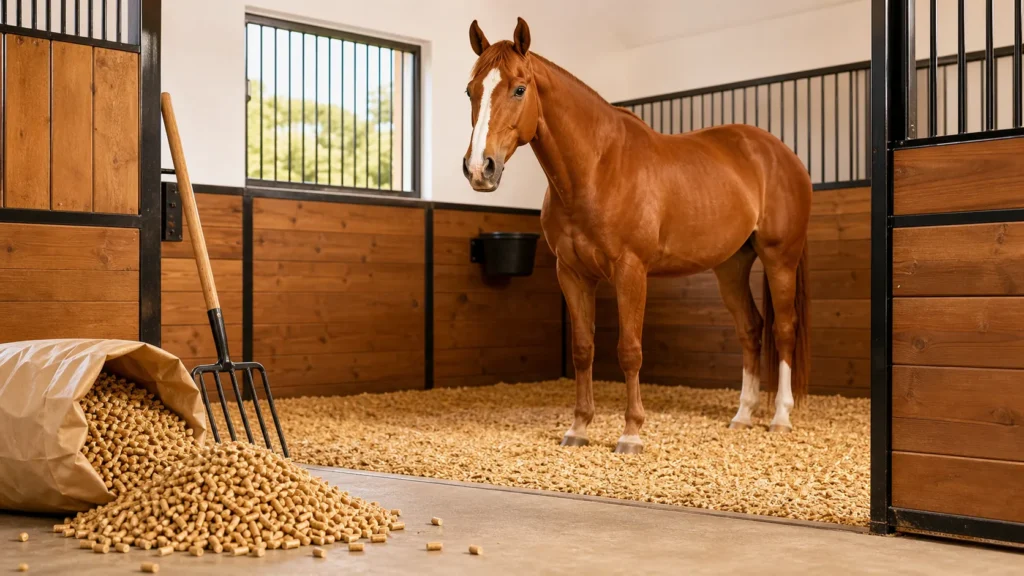
Our wheat straw pellets are compressed under high pressure into dense, cylindrical pellets that expand on contact with moisture, forming a soft, cushioned, and highly absorbent stable floor. Unlike loose straw bales, our pellets are virtually dust-free, making them the preferred choice for horses with respiratory conditions, skin allergies, or equine asthma.
Key product features:
- Virtually dust-free — safe for sensitive and respiratory-prone horses
- High absorbency—absorbs up to 3 to 4 times their own weight in liquid
- Compact storage—takes up significantly less barn space than loose straw bales
- Ammonia odour control — neutralises stable smells and keeps bedding fresher for longer
- 100% biodegradable and compostable — breaks down into usable organic fertiliser in as little as 2 to 3 weeks
- Easy management — simply remove wet, compressed patches and top up as needed
We supply in bulk quantities across the UK and into European markets, including France, Germany, Belgium, the Netherlands, and beyond. Whether you manage a small livery yard or a large equestrian centre, our straw pellets are delivered efficiently and priced competitively per tonne.
Buy straw pellets online today or contact our team to request a bulk quote. You can also visit our shop to browse our full range of bedding and fuel products.
Incorporated in 2009 (UK Company No. 06928341), Cambridgeshire Straw Pellets Limited has built a trusted reputation for consistent product quality and reliable bulk delivery. When your horses deserve the best stable floor, we are the supplier to call.
What is straw bedding for horses?
Straw bedding is dried cereal crop stalks used as a stable floor covering. It is natural, affordable, and has been the traditional choice for centuries.
Straw consists of dried stalks from cereal crops such as wheat, barley, or oats. It has been used for centuries as stable bedding for horses because it is affordable, natural, and soft. Straw bedding, often made from the leftover stalks of wheat, barley, or oats after the grain has been harvested, is a popular choice for horse stalls due to its affordability and availability. It provides a soft, absorbent, and relatively comfortable layer for horses to stand and lie on.
It is important to note, however, that not all straws perform equally in a stable environment. The type you choose has real consequences for your horse’s health and your yard’s daily management.
Which type of straw is best for horse bedding?
Wheat straw is the most recommended type. It drains well, is less palatable to horses, and offers a clean, firm bed that is easy to manage.
Wheat straw
Wheat straw is the most common type of straw used in animal bedding. It is soft and absorbent, making it ideal for horses housed indoors or outdoors. Wheat straw, well made and baled up, was always considered the “gold standard” horse bedding. The stalks are longer and stronger, should almost “clatter” onto the floor, so drainage is much better, and wheat straw is generally considered less palatable to horses.
This last point matters enormously. Horses that eat their bedding take in large amounts of low-nutritional-value fibre, which carries a risk of digestive complications including impaction colic. Wheat straw’s lower palatability means horses are less tempted. That said, clean wheat straw is the perfect bedding but the one most likely to cause colic if eaten. Monitoring remains essential.
Barley straw
Barley straw is very soft and comfortable but less absorbent than wheat straw. Horses often find it palatable and may be tempted to eat it. Barley straw is inexpensive but can be particularly prickly and could irritate your horse’s skin. Barley straw is flatter, softer and fluffier, compresses into a squelchier bed, and is usually more yellow. Often there may be tares of barley still attached, which horses like to eat, and this can sometimes make them cough.
Oat straw
Oat straw is the most palatable type of straw, making it not the ideal choice of bedding for horses. Oat straw is generally dustier and less absorbent than other types, but many horses enjoy chewing it. Oat straw tends to be the most palatable for horses but also has the highest potential for causing digestive issues. For most yard managers, oat straw as bedding is a risk not worth taking.
Straw types compared: a side-by-side guide
| Straw type | Absorbency | Palatability to horses | Dust level | Drainage | Best suited for |
|---|---|---|---|---|---|
| Wheat straw | Moderate | Low (preferred) | Moderate | Excellent | General bedding, foaling mares, most stables |
| Barley straw | Lower | High | Moderate to high | Poor | Feeding supplement only; not ideal as bedding |
| Oat straw | Low | Very high | High | Poor | Not recommended for bedding |
| Straw pellets | Very high (3 to 4x own weight) | Low | Virtually dust-free | Excellent | Respiratory horses, allergy-prone, limited storage |
Table: Straw-type comparison for horse bedding. Source: Cambridgeshire Straw Pellets Limited, compiled from industry data.
Why wheat straw is the best loose straw for horse bedding in the UK
Wheat straw is the standard; oat and barley straw are also used, though barley straw can be scratchy and is less palatable for horses that eat their bed. Beyond palatability, wheat straw also composts quickly, is widely available in the UK, and suits deep litter management. It is warm and comfortable, with excellent insulation, and it encourages horses to lie down, composts quickly, and creates a “deep litter” bed that is easy to maintain over weeks.
For foaling mares, in particular, clean wheat straw is the traditional and still sensible choice.
Are straw pellets better than loose straw for horse bedding?
Yes. Straw pellets outperform loose straw on absorbency, dust levels, storage efficiency, and hygiene, making them the superior choice for most modern stables.
Straw pellets are made by pressing straw under high pressure into small cylindrical pellets, from which most of the moisture is removed during the manufacturing process. The process makes the pellets dense, absorbent and effective bedding.
Straw pellets effectively absorb moisture, up to 3 to 4 times their own weight. This helps keep the pen dry for longer and reduces ammonia odours.
If your horse is prone to allergies or if you are looking for an easy-to-handle alternative to traditional straw bedding, straw pellets could be an excellent choice. They expand when lightly moistened, forming a soft, cushioned surface. In the stable, they are spread in a thin layer on the floor and lightly moistened to create a soft and comfortable bedding surface. Once expanded, they form an absorbent and low-dust base that supports a clean and healthy, stable environment.
Straw pellets decompose quickly in compost and produce less manure waste compared to other bedding. Straw pellets make a good organic fertiliser, as straw manure decomposes into usable material in just 2 to 3 weeks, making them well-suited for fields.
For equestrian yards with limited storage space, because straw pellets are dense, they also take up less storage space than, for example, peat or loose straw.
We supply premium straw pellets for horse bedding in bulk across the UK and Europe. You can also read our detailed comparison at straw pellets vs wood pellets to see how different bedding pellet types compare.
How to choose the best straw bedding for your horse’s specific needs
Not every horse has the same requirements. Here are the key factors to weigh:
- Respiratory health. For horses with equine asthma or chronic cough, straw pellets are the recommended option: low-dust and highly absorbent, creating a hygienic environment.
- Tendency to eat bedding. Horses that eat their bed are better suited to wheat straw over barley or oat straw or to straw pellets, which are less readily consumed.
- Skin sensitivity. Straw pellets are dust-free, making them a suitable choice for sensitive horses or allergy sufferers.
- Storage capacity. Yards with limited barn space benefit from pellets. Pellets take up significantly less storage space than loose bale straw before use.
- Budget. Loose wheat straw carries a lower unit cost but requires more labour and more frequent full strip-outs. Pellets have a higher upfront cost but lower long-term labour input.
- Muck heap management. Hemp, flax, and straw compost quickly, and straw pellets compost faster still, in approximately 2 to 3 weeks.
For more guidance on storage and management, see our buying and storage guides and our detailed post on how to store pellets and firewood.
Where to buy straw pellets for horse bedding in bulk across the UK
At Cambridgeshire Straw Pellets Limited (incorporated 2009, UK Company No. 06928341), we supply premium wheat straw pellets in bulk by the tonne or truckload to equestrian operations across the UK and into Europe. Whether you are a private horse owner or manage a large commercial livery yard, we can fulfil your order efficiently.
Buy straw pellets online directly from our shop, or contact us for a bulk quote. You can also explore our full product range including wood shavings and sawdust for equine use on our shop page.
Key takeaways
- Wheat straw is the best loose straw for horse bedding in the UK. It drains well, is less palatable, and is the most widely available.
- Barley straw is softer but can be prickly and is too palatable for most horses to be used safely as bedding.
- Oat straw is the most palatable of the three and carries the highest digestive risk if eaten. It is not recommended as primary bedding.
- Straw pellets outperform all loose straw types on absorbency, dust control, storage efficiency, and hygiene. They are the strongest option for horses with respiratory issues or allergies.
- Always choose straw that is clean, dry, mould-free, and sourced from a reliable supplier.
- For bulk supply of straw pellets in the UK and Europe, Cambridgeshire Straw Pellets Limited is a trusted and established supplier.
What type of straw is best for horse bedding?
Wheat straw is the best type of straw for horse bedding. It is moderately absorbent, drains well, is less palatable to horses, and is the standard across UK equestrian yards.
Is barley straw safe to use as horse bedding?
Barley straw can be used but is not ideal. Barley straw is flatter, softer and fluffier, compresses into a squelchier bed, and is usually more yellow. Often there may be tares of barley still attached, which horses like to eat, and this can sometimes make them cough. Most equestrian professionals recommend wheat straw or straw pellets over barley straw for stable bedding.
Can horses eat their straw bedding?
Yes, and this is a genuine concern. It can be harmful for horses to eat straw in moderation, and horse owners need to monitor the situation closely. Coarse fibre and high ADF levels raise the risk of impaction colic if straw is introduced too quickly. Wheat straw is the least palatable and therefore the safest loose straw option for horses that nibble their bed.
Are straw pellets better than loose straw for horses with asthma?
Yes. Straw pellets are virtually dust-free, making them ideal for horses with respiratory conditions. Loose straw, including wheat straw, carries a higher dust load and is not recommended for horses with equine asthma or recurrent airway obstruction.
How much straw do I need to bed a horse stable?
This depends on stable size and management style. A deep litter wheat straw bed typically requires an initial base of 4 to 6 bales, with top-ups of 1 to 2 bales per week. Straw pellets require less volume. Cleanup involves removing the compressed, wet pellets while leaving the remaining dry expanded bedding in place, which significantly reduces material usage and waste over time. For bulk pricing and delivery logistics, visit our FAQ page or get in touch with our team.
Where can I buy straw pellets for horse bedding in the UK?
You can buy straw pellets online directly from Cambridgeshire Straw Pellets Limited. We supply in bulk by the tonne or truck load across the UK and into Europe. Our products are also covered in detail in our post on what straw pellets are used for and are straw pellets good for horse bedding?
References
- Bedding for horses: the best materials compared — ClipMyHorse Magazine, 2024
- Feeding straw to horses: a low-energy forage alternative — Mad Barn, 2025
- Best horse bedding: shavings, straw and more — The Bit and Bridle, 2025
- Horse bedding: what is the best? — Harry Hall Insurance, August 2024
- Is it safe for horses to eat straw bedding? — Fox Den Equine
- Straw pellets and grit as bedding — BioHansa
- A guide to horse stable bedding: comparing straw, shavings and pellets — DB Horse Stable, 2024
best straw for horse bedding, wheat straw horse bedding UK, straw pellets for horses, horse bedding straw types, buy straw pellets for horse bedding