
 Français
 Deutsch
 Italiano
 Español
What are wood pellets?
Wood pellets are one of the most efficient and clean-burning solid fuels available today. Whether you heat a country home in Yorkshire, run a commercial boiler in Berlin, or manage a large-scale power facility in France, understanding what wood pellets are and how they work is the first step to making a confident, cost-effective fuel decision. At Cambridgeshire Straw Pellets Limited, we have supplied premium biomass fuels in bulk since 2009. Here is everything you need to know.
What are wood pellets?
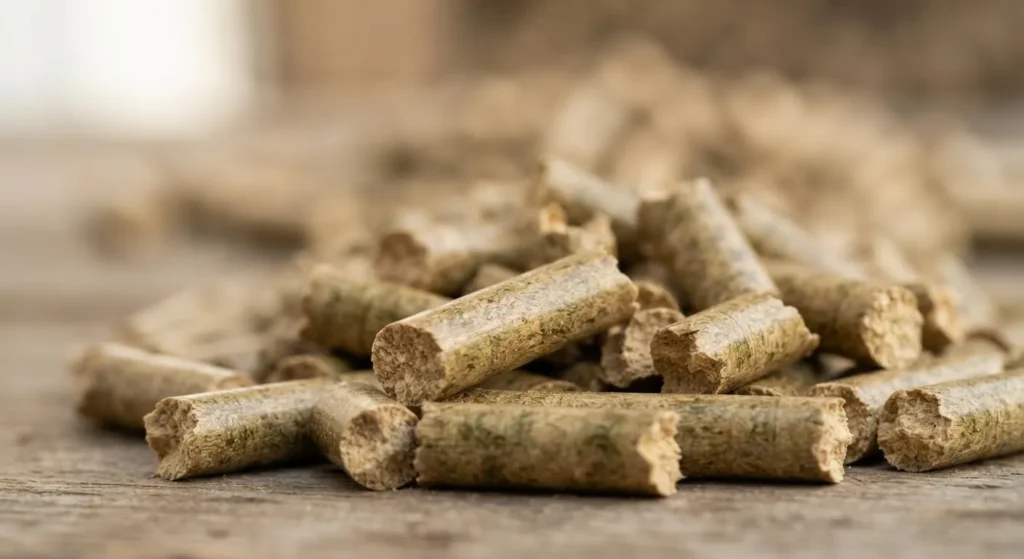
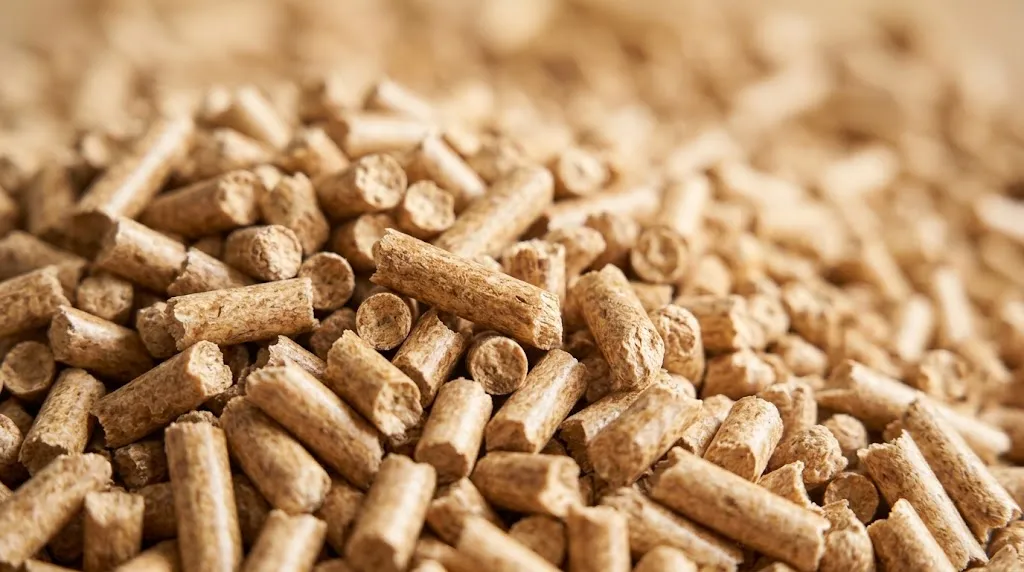
Wood pellets are small, cylindrical pellets made from compressed dry wood fibre, measuring 6–8 mm in diameter, with a moisture content below 10% and a calorific value of at least 16.5 MJ/kg.
They are produced by grinding wood waste materials such as sawdust, wood shavings, and forestry residues into a fine powder, then forcing that powder through a die under high heat and pressure. The natural lignin present in wood acts as the binding agent, meaning no chemical additives are required in premium-grade pellets. The result is a dense, uniform fuel that burns hot, clean, and efficiently.
By feedstock, forest and wood residues captured 70.2% of Europe’s wood pellet market share in 2025. This tells you something important about quality: the best pellets come from clean, traceable wood sources.
How are wood pellets made?
Wood pellets are made in five core stages:
- Raw material collection – Sawdust, wood shavings, and forestry residues are gathered from mills and forestry operations.
- Drying – The raw material is dried to reduce moisture content to below 15% before pelletisation.
- Grinding – The dried wood is ground into a fine, consistent powder.
- Pelletisation – The powder is pressed through a die at high pressure, generating heat that activates the natural lignin binder.
- Cooling and screening – Pellets are cooled, screened for fines, and packed for storage or bulk transport.
Moisture content (at or below 10%), net calorific value (at or above 16.5 MJ/kg), and bulk density (600–750 kg/m³) are standard parameters across all ENplus certified wood pellet grades.
What are wood pellets used for in the UK and Europe?
Wood pellets are used for residential heating, commercial heating, power generation, BBQ cooking, horse bedding, and industrial energy production.
The United Kingdom uses pellets in numerous applications, such as residential heating, power plants, commercial heating, and combined heat and power plants. By application, heating commanded a 64.5% share of the European wood pellet market in 2025, while combined heat and power installations are advancing at an 8.9% CAGR through 2031.
Specific uses include:
- Biomass boilers in homes and commercial properties
- Pellet stoves for room heating
- Power generation at utility scale (such as Drax Power Station in North Yorkshire)
- BBQ and outdoor cooking (see our wood pellets for BBQ)
- Horse bedding (see our guide on wood pellets for horse bedding)
- District heating networks across Europe
- Industrial process heat in manufacturing and food production
Consumers prefer wood pellets because they offer convenient storage, consistent quality, and efficient combustion compared with traditional firewood.
Why buy wood pellets in bulk for heating?
Buying wood pellets in bulk reduces the cost per tonne, ensures continuous fuel supply, and is the preferred procurement method for commercial and large residential heating systems.
European households represent a significant user base because pellet heating systems are widely installed for space heating purposes. When you buy wood pellets in bulk, you gain several advantages:
- Lower unit cost per tonne compared to bagged pellets
- Reduced frequency of ordering and delivery logistics
- Reliable supply chain, especially important through winter
- Greater control over storage conditions
Proper storage is equally important. Read our complete guide on how to store pellets and firewood to protect your investment and maintain fuel quality.
What are the best wood pellet grades? ENplus A1, A2, and B were explained.
The ENplus certification scheme classifies wood pellets into three grades based on ash content, moisture, and mechanical durability.
ENplus A1 certification is the top tier of a quality certification scheme for wood pellets, run independently of any single manufacturer, that verifies pellets against the technical requirements of the EN ISO 17225-2 standard. Certification covers the whole supply chain, from the raw material and production process at the mill through to storage, packaging, and delivery.
| Parameter | ENplus A1 | ENplus A2 | ENplus B |
|---|---|---|---|
| Moisture content | Max 10% | Max 10% | Max 10% |
| Ash content | Max 0.7% | Max 1.2% | Max 2.0% |
| Net calorific value | Min 16.5 MJ/kg | Min 16.5 MJ/kg | Min 16.5 MJ/kg |
| Mechanical durability | Min 98% | Min 97.5% | Min 97.5% |
| Diameter | 6 mm or 8 mm | 6 mm or 8 mm | 6 mm or 8 mm |
| Best use | Residential boilers, pellet stoves | Larger commercial installs | Industrial heating |
| Available at CSP | Yes. | Yes. | Yes. |
ENplus A1 is the strictest residential grade: ash content up to 0.7%, moisture content up to 10%, and mechanical durability of around 98%, meaning less than 2% of the pellets break down into dust during handling and transport.
You can buy ENplus A1 wood pellets online directly from our shop or choose our DINplus A1 wood pellets for an additional level of German-standard certification assurance.
How much do wood pellets cost per tonne in the UK?
The price of wood pellets per tonne depends on grade, volume ordered, delivery distance, and current market conditions. Read our detailed breakdown on how much a tonne of wood pellets costs for current indicative pricing. Bulk orders in truck quantities consistently offer the most competitive cost per tonne.
Key differences: wood pellets vs straw pellets
Both are compressed biomass fuels, but they differ in feedstock, ash content, and application. Wood pellets carry a lower ash content (0.7% for ENplus A1), making them preferable for sensitive boilers and stoves. Straw pellets carry a higher ash content and are more commonly used for animal bedding and agricultural heating. Read our full comparison on straw pellets vs wood pellets to understand which product suits your needs.
Where to buy wood pellets in Europe, including the UK, France, and Germany?
We supply certified wood pellets in bulk throughout the United Kingdom and Europe from our base in Cambridgeshire. Germany, Italy, France, Denmark, and Sweden are among the major countries that use wood pellets for heating purposes. Germany, Italy, Austria, France, and the UK collectively account for the majority of European pellet consumption, spanning residential heating, commercial district heating, and utility-scale power generation.
Our bulk supply covers delivery by truck or by the tonne, making us a reliable partner for:
- Residential customers with large biomass heating systems
- Commercial property managers
- Agricultural operations
- Equestrian centres (see wood pellets for horse bedding)
- Industrial buyers
Visit our shop or read our buying guide to place an order.
Buy premium wood pellets in bulk in the UK and Europe.
Wood pellets are small, cylindrical pellets of compressed wood fibre, typically 6 mm or 8 mm in diameter, produced from sawdust, wood shavings, and other dry wood residues under high pressure without chemical binders. At Cambridgeshire Straw Pellets Limited, incorporated in 2009 under registration number 06928341, we supply ENplus A1 certified wood pellets in bulk quantities measured in tonnes or truck loads across the UK and Europe.
Our wood pellets meet strict ENplus standards: moisture content at or below 10%, ash content at or below 0.7%, and a net calorific value of at least 16.5 MJ/kg (4.6 kWh/kg). These specifications make our pellets suitable for residential biomass boilers, pellet stoves, commercial heating systems, BBQ and outdoor cooking, and horse bedding. We offer softwood wood pellets, DINplus A1 wood pellets, and A1-certified wood pellets alongside a full range of solid fuel products, including wood briquettes, firewood, charcoal, wood chips, sawdust, and wood shavings.
All orders are handled with full transparency. Visit our shop or contact us to place a bulk order today.
Why is the European wood pellet market growing so fast?
The global wood pellet market is on track to almost triple in value, rising from $12.1 billion in 2025 to $31.1 billion by 2035, according to the latest Future Market Insights report. This represents a 9.9% annual growth rate, confirming that biomass fuel remains a cornerstone of the world’s renewable energy transition.
Several factors are driving this growth across Europe:
- Policy: EU renewable energy directives are moving utilities away from coal toward certified biomass.
- Residential demand: The EU is the world’s largest wood pellet market, consuming 22.7 million metric tonnes in 2025. In 2026, EU wood pellet consumption is forecast to increase by another 500,000 MT based on further expansion of residential use.
- Industrial transition: Wood pellets are used in industrial furnaces because they provide stable heat generation, lower ash content, and improved fuel handling compared with traditional biomass materials. Industrial users are investing in pellet-fired heating systems to reduce dependence on conventional fuels and improve environmental performance.
- Power generation: As of 2024, most co-firing power stations have either closed or converted, with several shifting toward using 100% wood pellets for fuel. The largest of these is Drax Power Station in North Yorkshire, which has converted four of its six 65 MWe generating units to run exclusively on wood pellets.
The UK continues to be the world’s largest importer of wood pellets, with imports in 2025 projected to reach 9.6 million metric tonnes, a 3% increase from 2024, underscoring the growing demand driven by the country’s large-scale biomass power generation sector.
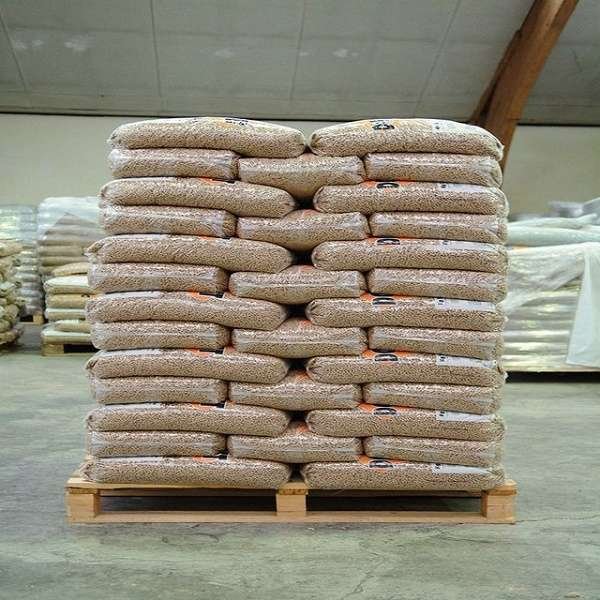
How long does a 20 kg bag of wood pellets last?
This depends on the heat output of your stove or boiler and how long you run it each day. Our detailed guide on how long does a 20 kg bag of pellets last walks through the calculations for different appliance types. For larger installations, review how many pellets a pellet stove uses in 24 hours.
What is the calorific value of wood pellets?
The net calorific value for ENplus certified wood pellets is at or above 4.6 kWh/kg, equivalent to at least 16.5 MJ/kg as received. This is the energy released per kilogram of pellet burned under standard conditions. For a full technical explanation, read our dedicated post on wood pellet calorific value.
“Wood pellets are not just a fuel. They are a precision-engineered energy product. The difference between certified and uncertified pellets is the difference between a clean, efficient burn and a dirty, costly one.” — Cambridgeshire Straw Pellets Limited
Key takeaways
- Wood pellets are compressed cylinders of dry wood fibre, 6–8 mm in diameter, used for heating, power generation, cooking, and animal bedding.
- ENplus A1 is the premium residential grade: max 0.7% ash, max 10% moisture, min 16.5 MJ/kg calorific value.
- The EU consumed 22.7 million metric tons of wood pellets in 2025, making it the world’s largest wood pellet market.
- The global wood pellet market is forecast to grow from $12.1 billion in 2025 to $31.1 billion by 2035 at a 9.9% annual growth rate.
- Cambridgeshire Straw Pellets Limited supplies certified wood pellets in bulk (by tonne or truck) to customers across the UK and Europe.
- Always check for ENplus certification before purchasing to ensure fuel quality, consistent combustion, and boiler compatibility.
- Pair your wood pellets purchase with a read of our storage guide to protect quality over winter.
What are wood pellets made of?
Wood pellets are made from compressed dry wood residues including sawdust, wood shavings, and forestry offcuts. Natural lignin in the wood acts as the binder. No chemical adhesives are used in premium ENplus-certified grades. You can also browse related products like oak sawdust and pine wood shavings in our shop.
Are wood pellets better than firewood for heating?
Yes, in most residential and commercial heating systems. Wood pellets have a standardised moisture content (below 10%) and a consistent calorific value of at least 16.5 MJ/kg, which means more predictable and cleaner heat output than seasoned or unseasoned firewood. If you prefer traditional firewood, we also supply birch firewood, oak firewood, and ash firewood.
How many tonnes of wood pellets do I need for one heating season?
A typical UK home with a 15 kW biomass boiler running for seven months of the year consumes approximately 3 to 5 tonnes of wood pellets per heating season. Larger properties and commercial premises consume significantly more. Contact us to discuss your specific bulk order requirements.
What is the difference between ENplus A1 and ENplus A2 wood pellets?
The main practical difference is ash content: A1 pellets are capped at 0.7% ash, while A2 pellets can run to roughly 1.2–1.5%. A1 is the preferred grade for residential pellet stoves and sensitive boilers. A2 suits larger commercial installations where slightly higher ash content is acceptable.
Can wood pellets be used for horse bedding?
Yes. Wood pellets, particularly softwood grades, are a popular bedding material for horses due to their high absorbency and low dust content. Read our complete guide on wood pellets for horse bedding to understand correct application and quantities.
Where can I buy wood pellets in bulk in the UK?
You can buy wood pellets in bulk directly from Cambridgeshire Straw Pellets Limited. We supply by the tonne or by truck across the UK and Europe. Visit our shop or contact our team to discuss volume pricing.
What are biomass wood pellets?
Wood pellets are compressed biomass fuel derived from forestry residues, agricultural waste, and wood processing byproducts. When classified as biomass pellets, they are used at utility scale for electricity generation and combined heat and power, as seen at Drax Power Station. Read more on our dedicated page about what biomass wood pellets are.
References
- Wood & Panel Europe (2025): “UK wood pellets demand grows as imports rise in 2025.” Available at woodandpanel.com
- USDA Foreign Agricultural Service (2026): “European Union: Wood Pellets Annual.” EU consumed 22.7 million metric tons of pellets in 2025. Available at fas.usda.gov
- Future Market Insights (2025): Global wood pellet market forecast from $12.1 billion in 2025 to $31.1 billion by 2035. Available at woodyfuel.co.uk
- Mordor Intelligence (2025): Europe Wood Pellet Market size projected at USD 12.48 billion in 2025, reaching USD 18.03 billion by 2031 at a CAGR of 6.29%. Available at mordorintelligence.com
- ENplus Certification Scheme (2026): ENplus A1 verifies pellets against the technical requirements of the EN ISO 17225-2 standard. Available at peletpoltarex.com
- ENplus ST 1001:2022 Standard (peletlab.pl): Moisture content (max 10%), net calorific value (min 16.5 MJ/kg), and bulk density (600–750 kg/m³) apply to all three ENplus classes. Available at peletlab.pl
- IMARC Group (2025): Europe commands a 47.9% share of the global wood pellet market in 2025, driven by EU renewable energy mandates, carbon pricing, and established pellet heating infrastructure. Available at imarcgroup.com