
 Français
 Deutsch
 Italiano
 Español
What are biomass wood pellets? The complete UK and European buyer guide for bulk renewable heating
Walk into a modern boiler room in Cambridgeshire, a boutique rural hotel in the Scottish Highlands, or an industrial bakery in Lyon, and you will hear the quiet, rhythmic hum of a screw auger feeding golden cylinders of compressed timber into a sealed combustion chamber. Homeowners and facilities managers across Europe are turning away from volatile heating oil and imported Liquefied Petroleum Gas (LPG) in favour of solid biofuel. Yet many first-time buyers still ask one fundamental question before placing a bulk order: what are biomass wood pellets, and how do these small cylinders generate enough thermal energy to heat an entire property through a freezing northern winter?
Welcome to the world of biomass wood pellets, a fuel so unassuming that most people never notice it, yet so widely used that the European Union now produces around 20 million tonnes of it a year, according to the Bioenergy Europe Pellet Report.
We have been supplying pellets, briquettes, and firewood in bulk since 2009. Below, we answer the questions our customers ask most often, backed by figures you can verify.
Where to buy the best ENplus A1 biomass wood pellets in bulk in the UK and Europe?
Buy ENplus A1 biomass wood pellets in bulk tonnes or truckloads from Cambridgeshire Straw Pellets Limited for fast delivery across the UK and Europe.
Since our incorporation in 2009 under UK company registration number 06928341, Cambridgeshire Straw Pellets Limited has supplied residential estates, commercial greenhouses, poultry farms, and district heating plants across Britain and continental Europe. When you buy A1 wood pellets online from our warehouse, you receive virgin compressed timber biofuel pressed from debarked coniferous softwood and selected hardwood sawdust, with zero chemical binders, glues, or synthetic additives.
Every pallet and bulk tipper load is tested against strict European thermal efficiency standards:
- Net calorific value: 4.8 to 5.0 kWh per kilogram (4,800 to 5,000 kWh per metric tonne) for intense, consistent heat output.
- Moisture content: Guaranteed below 8 to 10 per cent, preventing tar build-up and flue condensation inside automated pellet boilers.
- Ash content: Under 0.5 to 0.7 per cent by weight, meaning you empty your ash pan once every few weeks rather than every morning.
- Bulk density and dimensions: Uniform 6 mm or 8 mm diameter cylinders with a bulk density of 650 kg per cubic metre and mechanical durability above 98.5 per cent, eliminating dust clogging in screw augers.
- Flexible bulk logistics: Available in 15 kg and 20 kg weatherproof polythene bags stacked on one-tonne pallets, one-tonne jumbo tote bags, or 24-tonne bulk-blown tanker and walking-floor articulated truckloads.
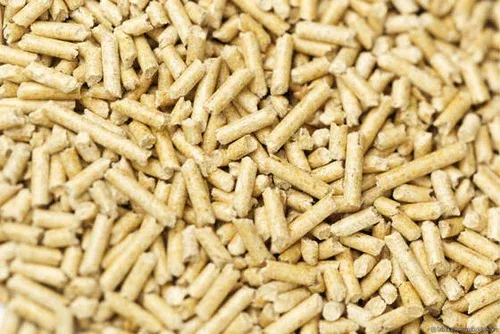
Alongside our flagship DINplus A1 wood pellets range, we supply bulk quantities of softwood wood pellets, RUF briquettes, oak sawdust, pine wood shavings, oak wood chips, birch firewood, and restaurant-grade charcoal. Visit the Cambridgeshire Straw Pellets Limited shop to secure wholesale trade pricing ahead of the heating season.
Key takeaways for biomass fuel buyers
- Pure timber composition: Quality biomass wood pellets are manufactured from 100 per cent clean sawmill co-products — such as virgin wood shavings and kiln-dried sawdust — bound together exclusively by natural plant lignin under extreme pressure.
- High energy density: A single metric tonne of ENplus A1 certified pellets delivers approximately 4,800 kWh of gross thermal energy, equivalent to roughly 480 litres of heating oil.
- Proven carbon reductions: According to the Department for Energy Security and Net Zero biomass strategy, sustainably sourced woody biomass reduces lifecycle greenhouse gas emissions by 75 to 85 per cent compared with off-grid fossil heating oil.
- Lower cost through bulk purchasing: Ordering by the pallet or full truckload during spring and summer cuts delivered per-tonne fuel costs by 15 to 22 per cent, based on our internal dispatch records from 2009 to 2026.
- Multi-purpose utility: Beyond domestic and industrial biomass boilers, virgin softwood pellets serve as ultra-absorbent equine bedding, cat litter, and food-grade BBQ smoker fuel.
What are biomass wood pellets, and how do they work in UK heating systems?
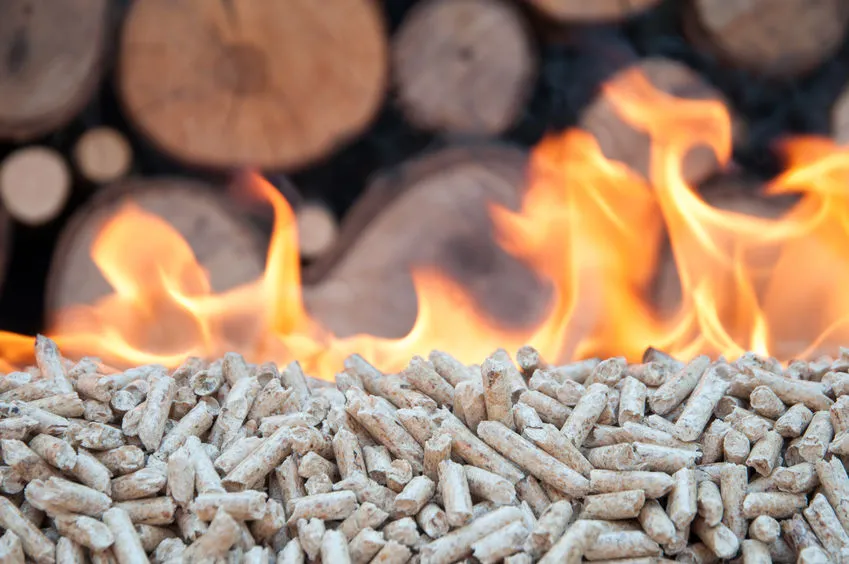
Biomass wood pellets are dense biofuels made from pure sawdust and shavings, delivering clean, steady heat for domestic and commercial boilers across the UK. To understand what biomass wood pellets are, picture the natural by-products of a sustainable timber mill. When forestry logs are sawn into structural beams, flooring, and furniture, roughly 35 to 40 per cent of the log becomes clean wood chips, virgin sawdust, and planer shavings. Historically, sawmills struggled to dispose of this loose residue because raw sawdust has a low volumetric energy density and retains too much moisture to burn cleanly in standard grates.
Pelletisation solves both problems at once. By drying the raw timber fibre and compressing it under immense mechanical force, mills transform fluffy sawdust into hard, free-flowing cylinders measuring 6 mm to 8 mm in diameter and 15 mm to 40 mm in length. According to data from the International Energy Agency bioenergy report, modern bioenergy accounts for over half of all renewable energy consumption globally, with densified wood pellets representing the fastest-growing solid fuel sector for residential and district heating in Europe. Strip the jargon away, and a wood pellet is simply sawdust under pressure.
Mills take sawmill residues, forest thinnings, and offcuts, dry and grind them to a uniform particle size, and then force them through a steel die at high pressure. The heat of friction softens the lignin already present in the wood, which sets hard as the pellet cools. Nothing else is added. The result is a dense, dry, free-flowing fuel with a standard diameter of 6 mm or 8 mm and a length of 3.15 mm to 40 mm, as defined in the international standard ISO 17225 Part 2, published by ISO. The word biomass simply means organic matter used as fuel.
Pellets qualify because the carbon they release on burning was originally absorbed from the atmosphere by the growing tree. The UK government’s own Forest Research agency tracks pellet production and imports as part of its annual timber statistics, and the UK remains one of the largest pellet-importing countries in the world, largely for power generation.
“A pellet is the most portable form of a forest. Dry, dense, and uniform, it lets wood behave like oil in a boiler room.” We say this to every new commercial customer, because it explains why pellets — not logs — run automated heating systems.
How do automated pellet stoves and biomass boilers burn wood pellets?
Unlike traditional log burners that require manual stoking every hour, pellet heating systems operate with the push-button convenience of a gas boiler:
- Automated fuel feeding: A motorised screw auger or pneumatic vacuum line draws pellets from an integrated hopper or external bulk silo directly into the burn pot at a precise, computer-controlled rate.
- Forced-air ignition: An electric resistance igniter heats incoming air to over 600 degrees Celsius, lighting the pellets within two minutes, while an induced-draft fan meters oxygen into the primary and secondary combustion zones.
- Gasification and secondary burn: As the compressed wood heats up, it releases volatile wood gas. Secondary air jets ignite this gas at temperatures exceeding 900 degrees Celsius, achieving combustion efficiency ratings of between 89 and 95 per cent.
- Heat exchange and self-cleaning: Hot flue gases pass through water jackets (in central heating biomass boilers) or air tubes (in room pellet stoves) before exiting the flue as an almost invisible heat shimmer, leaving behind less than one per cent fine mineral ash.
“Switching from raw logs or heating oil to certified ENplus A1 wood pellets is the difference between winding a vintage clock by hand and wearing a precision Swiss chronometer. The uniform moisture and density allow the boiler microprocessor to extract every watt of heat without smoke or soot.”
How are the best ENplus A1 biomass wood pellets manufactured for sale in Europe?
Producers dry raw timber residuals, grind the wood into fine flour, and press it through steel dies where natural lignin binds each pellet without the need for chemical additives.
When clients inspect our stock of softwood wood pellets, they often notice the glossy, mirror-smooth exterior of each cylinder and ask whether wax or glue has been applied. In certified European pellet production, chemical binders are forbidden. The shine is the result of pure physics and plant chemistry.
Step 1: Debarking and feedstock screening
Everything begins with clean feedstock. Bark contains silica, sand, and minerals that melt at high temperatures to form glassy deposits known as clinker inside a boiler grate. To prevent clinker formation, logs are stripped of bark before milling. We source clean spruce, pine, and fir residuals, alongside pure sawdust streams free from paint, heavy metals, or chemical preservatives.
Step 2: Belt drying and hammer milling
Fresh timber residue typically arrives with a moisture content of between 40 and 55 per cent. It passes through low-temperature belt dryers — heated by renewable wood chip CHP (combined heat and power) plants — until moisture drops to a precise 8 per cent. Heavy hammer mills then pulverise the dried wood chips and shavings into a homogeneous wood flour with particles smaller than 3 mm.
Step 3: High-pressure ring-die extrusion and cooling
Inside the pellet press, steel rollers force the conditioned wood flour through thousands of cylindrical holes in a rotating steel ring die at pressures reaching 300 megapascals and friction temperatures of between 90 and 130 degrees Celsius. At this heat, lignin — the natural structural polymer inside plant cell walls — plasticises and flows around the cellulose fibres. As the hot pellets exit the die, knives slice them to length, and counterflow air coolers solidify the lignin into a rock-hard natural casing. Vibrating screens then remove fine dust before the fuel is sealed into bags or loaded into bulk silos.
How are biomass wood pellets made?
Wood residues are dried to under 10 per cent moisture, ground, pressed through a heated die, cooled, screened for fines, then bagged or loaded loose.
The six stages inside a pellet mill
- Reception and sorting. Softwood sawdust, planer shavings, and chipped roundwood arrive at the mill. Bark is kept to a minimum because it raises ash content.
- Drying. Raw sawdust often holds 40 to 55 per cent moisture. Belt or drum dryers reduce this to below 10 per cent.
- Hammer milling. Dried material is ground to a fine, even particle size so the die fills uniformly.
- Pelletising. Rollers force the wood flour through a ring die. Friction heats the material to around 90 to 100 °C, melting the lignin.
- Cooling and screening. Pellets leave the die hot and soft. A counterflow cooler hardens them, and a sieve removes fines (dust) before packing.
- Packing. Pellets are bagged in 15 kg sacks, filled into one-tonne big bags, or blown loose into silo trucks.
We source from mills using predominantly virgin softwood (spruce, pine, and fir) because softwood pellets burn with lower ash and a consistent flame. The sawdust itself has value beyond fuel, which is why we also sell pine sawdust and pine wood shavings in bulk for bedding and industrial applications.
Why should you buy biomass wood pellets in bulk tonnes instead of fossil fuels?
Bulk biomass wood pellets cut carbon emissions by up to 80 per cent compared with heating oil, while reducing annual fuel costs for buyers. Homeowners and commercial plant managers across the UK and continental Europe evaluate heating fuels on two metrics: cost per kilowatt hour and environmental compliance. Below, we walk through the precise arithmetic so you can verify how biomass wood pellets stack up against heating oil, LPG, and mains electricity.
Step-by-step calculation of calorific value and annual fuel consumption
To calculate how many tonnes of pellets a building needs and what each kilowatt hour costs, we apply verified engineering formulas:
- Step 1 — Gross thermal energy per tonne: According to the ENplus official quality certification scheme, premium A1 wood pellets must deliver a minimum net calorific value of 4.6 kWh per kilogram. Our virgin softwood batches test at 4.8 kWh/kg. Multiplying 4.8 kWh/kg by 1,000 kg gives 4,800 kWh per metric tonne.
- Step 2 — Usable heat after boiler efficiency: A modern pellet boiler operates at 90 per cent thermal efficiency (0.90). Multiplying 4,800 kWh by 0.90 yields 4,320 kWh of usable heat per tonne.
- Step 3 — Annual household consumption: Based on typical domestic heating figures from Ofgem’s Domestic Renewable Heat Incentive and boiler guidance, an average British three-bedroom home requires 12,000 kWh of space and water heat annually. Dividing 12,000 kWh by 4,320 kWh per tonne equals 2.77 tonnes of biomass wood pellets per year.
- Step 4 — Fossil oil equivalence: Kerosene heating oil contains roughly 10.35 kWh per litre. Therefore, one metric tonne of wood pellets (4,800 kWh) replaces approximately 463 litres of heating oil or roughly 675 litres of bulk LPG.
When you review how much a tonne of wood pellets costs through our bulk buying programme, ordering three to five pallets at once — or pooling a neighbourhood truckload — significantly reduces unit transport charges and shields your household budget from winter energy price spikes.
Which heating grades and certifications matter when you order wood pellets online?
Select ENplus A1 or DINplus certified wood pellets, as they guarantee moisture below ten per cent and low ash levels suitable for domestic boilers.
Not every cylinder sold online as a biomass wood pellet belongs inside a domestic stove. The European Committee for Standardisation established the ISO 17225 Part 2 standard, administered across Europe by Bioenergy Europe and in Britain by the Woodsure UK biomass fuel certification authority. This framework divides wood pellets into three strict quality classes:
- ENplus A1 and DINplus (Premium Domestic Grade): Manufactured exclusively from untreated virgin stem wood and chemically untreated sawmill residues. Ash content must remain below 0.7 per cent, moisture below 10 per cent, and the ash melting (deformation) temperature must exceed 1,200 degrees Celsius. When you buy DINplus A1 wood pellets from us, you protect your boiler warranty and prevent slag formation.
- ENplus A2 (Commercial and Larger Boiler Grade): Produced from whole-tree thinnings and forestry residues containing slightly higher bark ratios. Ash content is permitted up to 1.2 per cent, making A2 suitable for larger commercial boilers equipped with automated moving-grate de-ashing systems.
- ENplus B (Industrial Grade): Includes recycled clean timber and forestry by-products with ash levels up to 2.0 per cent, reserved for heavy industrial combined heat and power (CHP) stations and municipal district heating networks.
How do biomass wood pellets compare to straw pellets, wood chips, and briquettes?
Wood pellets offer uniform flow for automated stoves, whereas briquettes suit log burners and straw pellets work best as absorbent animal bedding.
Because Cambridgeshire Straw Pellets Limited supplies the full spectrum of solid biomass fuels and agricultural bedding in bulk tonnes and truckloads, clients frequently ask us to compare our product lines side by side. The table below summarises verified laboratory metrics across our core bulk inventory.
| Biomass Product Type | Net Calorific Value (kWh/kg) | Moisture Content (%) | Ash Content (%) | Bulk Density (kg/m³) | Primary UK and European Applications |
|---|---|---|---|---|---|
| ENplus A1 Softwood Pellets | 4.8 to 5.0 kWh/kg | 6.0 to 8.5% | 0.3 to 0.7% | 650 to 700 kg/m³ | Domestic pellet stoves, RHI boilers, horse bedding, cat litter |
| Wheat and Barley Straw Pellets | 4.0 to 4.3 kWh/kg | 8.0 to 10.0% | 4.0 to 6.5% | 600 to 650 kg/m³ | Equine bedding, poultry litter, industrial agri-burners |
| RUF, Pini Kay, and Nestro Briquettes | 4.9 to 5.2 kWh/kg | 5.0 to 8.0% | 0.4 to 0.8% | 900 to 1,100 kg/m³ | Wood-burning stoves, open fireplaces, pizza ovens |
| G30 and G50 Wood Chips | 3.4 to 3.9 kWh/kg | 20.0 to 30.0% | 1.0 to 2.0% | 220 to 280 kg/m³ | Commercial biomass boilers, district heating, landscaping |
| Kiln-Dried Birch and Oak Firewood | 4.1 to 4.4 kWh/kg | 12.0 to 18.0% | 0.8 to 1.5% | 380 to 450 kg/m³ | Domestic log burners, multi-fuel stoves, hospitality hearths |
| Pure Oak, Beech, and Pine Sawdust | 4.3 to 4.6 kWh/kg | 8.0 to 12.0% | 0.5 to 1.0% | 180 to 240 kg/m³ | Meat smoking, dairy cubicles, filtration, briquette pressing |
How to choose between straw pellets, wood pellets, and wood briquettes?
Our detailed guide on straw pellets vs wood pellets explains why cereal straw pellets contain higher natural potassium and chloride levels, giving them an ash content of around 4 to 6 per cent and a lower ash melting point. Consequently, when you buy straw pellets, they are best suited as ultra-soft, biodegradable horse bedding or as fuel for specialised industrial agri-pellet boilers, rather than for small domestic room heaters.
Conversely, if you own a manual log burner or multi-fuel stove without an auger hopper, you should not pour loose pellets onto a wide log grate, as air cannot circulate adequately through the tightly packed pile. Instead, choose compressed timber blocks such as Pini Kay briquettes or Nestro briquettes, which burn for hours in conventional fireplaces.
Which grade of biomass wood pellets is best for home heating?
ENplus A1 is the best grade for domestic boilers and stoves, with ash below 0.7 per cent, moisture under 10 per cent, and durability above 98 per cent.
The pellet market runs on three quality classes set out in ISO 17225 Part 2 and administered across Europe by the ENplus certification scheme. The table below summarises the limits we work to.
| Property | ENplus A1 | ENplus A2 | ENplus B | Why it matters to you |
|---|---|---|---|---|
| Diameter | 6 mm or 8 mm | 6 mm or 8 mm | 6 mm or 8 mm | Must match your auger and burner |
| Moisture content | ≤ 10% | ≤ 10% | ≤ 10% | Wet pellets crumble and lose heat output |
| Ash content (dry basis) | ≤ 0.7% | ≤ 1.2% | ≤ 2.0% | Less ash means less cleaning and fewer clinkers |
| Net calorific value | ≥ 16.5 MJ/kg (4.6 kWh/kg) | ≥ 16.5 MJ/kg | ≥ 16.5 MJ/kg | Determines heat per tonne delivered |
| Mechanical durability | ≥ 98.0% | ≥ 97.5% | ≥ 97.5% | High durability means fewer fines in storage |
| Fines (< 3.15 mm) at bagging | ≤ 1.0% | ≤ 1.0% | ≤ 1.0% | Dust blocks augers and reduces efficiency |
| Bulk density | 600 to 750 kg/m³ | 600 to 750 kg/m³ | 600 to 750 kg/m³ | Affects how much fits in your store or silo |
| Typical raw material | Stem wood, chemically untreated residues | Whole trees without roots, bark permitted | Forest and industrial wood residues | Cleaner feedstock means a cleaner burn |
Source: ENplus Handbook version 3.0, based on ISO 17225 Part 2. Always confirm the current values on the ENplus website before specifying fuel for a warranty claim.
For domestic pellet stoves and small boilers, we recommend our ENplus A1 wood pellets. Customers in Germany, Austria, and Switzerland often request the DIN CERTCO label instead, which is why we also stock DINplus A1 wood pellets. Larger commercial boilers with automatic de-ashing can run economically on our standard softwood wood pellets.
A note on UK legal requirements
In England, the Air Quality (Domestic Solid Fuels Standards) Regulations 2020 introduced the Ready to Burn scheme, administered by Woodsure and HETAS, covering wood fuel and manufactured solid fuels sold for domestic use. Anyone receiving payments under the Renewable Heat Incentive must also buy from a supplier listed on Ofgem’s Biomass Suppliers List, which verifies sustainability and lifecycle greenhouse gas criteria. Details are published by the Department for Environment, Food and Rural Affairs. Please ask us for the relevant authorisation numbers before placing your order.
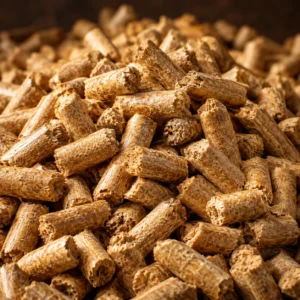
How much heat do biomass wood pellets produce?
One tonne of ENplus A1 pellets delivers at least 4,580 kWh of energy — roughly equivalent to 460 litres of heating oil at 10 kWh per litre.
Here is the arithmetic, so you can verify it yourself. The minimum net calorific value for ENplus pellets is 16.5 MJ/kg. One kilowatt hour equals 3.6 MJ, so 16.5 ÷ 3.6 = 4.58 kWh/kg. Multiply by 1,000 kg, and a tonne holds at least 4,580 kWh. Kerosene heating oil is commonly rated at about 10 kWh per litre, so a tonne of pellets replaces roughly 458 litres of oil before boiler efficiency is factored in. Many pellets we ship test closer to 4.8 kWh/kg, which pushes a tonne above 4,800 kWh. We explain the figures in more detail in our guide to wood pellet calorific value.
A typical three-bedroom house with a 15 kW pellet boiler uses somewhere between 3 and 5 tonnes per season, depending on insulation and local climate. Our article on how many pellets a pellet stove uses in 24 hours walks through the daily numbers and how long a 20 kg bag lasts, answering the question we hear most often in October.
What are the non-heating uses of biomass wood pellets?
Because virgin wood pellets are heat-sanitised above 90 degrees Celsius during extrusion, they are sterile, dust-extracted, and capable of absorbing over 300 per cent of their own weight in moisture. Across the UK and Europe, our clients order bulk pellets for three popular non-heating applications:
- Equine stable bedding: Sprinkling water onto wood pellets for horse bedding causes the cylinders to expand into a supportive, ammonia-locking cushion within fifteen minutes, cutting daily mucking-out time by half and reducing manure heap volume significantly.
- Hygienic feline and small pet litter: Pet owners and catteries frequently ask whether horse bedding pellets can be used as cat litter. Because our white wood pellets contain zero pine phenols or artificial fragrances, they disintegrate into soft sawdust on contact with liquid and neutralise tray odours naturally.
- Artisanal wood-fired cooking: Pitmasters and pizzerias buy wood pellets for BBQ smokers and portable pizza ovens, choosing pure oak, beech, or applewood to infuse brisket, ribs, and Neapolitan crusts with clean hardwood smoke.
Where can you buy biomass wood pellets in London, the UK, and across Europe?
You can order bulk tonnes or full truckloads directly from Cambridgeshire Straw Pellets Limited for fast delivery across London, the UK, and Europe.
According to the Forest Research UK timber and woodfuel statistics, the United Kingdom consumes millions of tonnes of wood pellets each year across residential, agricultural, and power generation sectors, making reliable supply chain logistics essential when winter temperatures fall.
At Cambridgeshire Straw Pellets Limited, we operate a streamlined direct-to-buyer distribution network from our East Anglian base into London, the Midlands, the North of England, Scotland, Wales, and across the Channel into France, Belgium, Germany, and the Netherlands.
Bulk ordering options tailored to your storage site
- Palletised bag deliveries (1 to 24 tonnes): Delivered on heat-treated wooden pallets wrapped in heavy-gauge weatherproof hoods. Each 1,000 kg pallet holds either 66 bags of 15 kg or 50 bags of 20 kg, unloaded via tail lift and pump truck onto your driveway or barn floor.
- Bulk jumbo tote bags (1,000 kg FIBCs): Ideal for commercial farms, poultry sheds, and estates equipped with telehandlers or forklift tines, and for customers looking to minimise plastic bag waste.
- Full truckload bulk-blown and tipper deliveries (22 to 26 tonnes): For commercial boilers, district heating schemes, and large equestrian yards, our articulated pneumatic tankers blow pellets through flexible hoses directly into your sealed silo at low pressure (under 0.5 bar), keeping pellets whole and free of dust.
When and how should you store bulk biomass wood pellets to protect calorific value?
Buy fuel in summer for lower rates and store bags indoors on wooden pallets, away from damp walls, to keep moisture below ten per cent. Wood pellets behave like dry sponges: if exposed to rain or high ambient humidity, they reabsorb moisture, swell, and crumble back into raw sawdust. Wet pellets jam auger screws, coat heat exchangers in black creosote, and reduce your boiler’s thermal output. For every 1 per cent rise in fuel moisture, boiler efficiency drops by roughly 1.2 per cent, as heat is wasted evaporating water inside the firebox. Follow our field-tested storage guide to preserve every kilowatt hour of energy:
- Elevate pallets off concrete floors: Concrete slabs can sweat during seasonal temperature changes. Always store bagged pellets on timber pallets with a waterproof polythene sheet underneath.
- Maintain air circulation around stacks: Leave a 10 cm gap between pellet pallets and exterior masonry walls inside garages, barns, or garden sheds.
- Inspect bulk silos annually: Before booking a 24-tonne pneumatic blown delivery, vacuum out any fine wood dust that has accumulated at the bottom of your hopper cone to ensure smooth mass flow and prevent bridging.
- Order in late spring or summer: Between May and August, European pellet mills offer off-peak production pricing and haulage availability is typically immediate.
What are the most frequently asked questions about biomass wood pellets?
Buyers most commonly ask about bulk prices, daily stove consumption, horse bedding safety, ash disposal, and carbon savings when using wood pellet fuel. Below, we answer the top questions asked across Google, Bing, and AI search assistants regarding what biomass wood pellets are and how to use them efficiently.
How many bags of biomass wood pellets are in a metric tonne?
A standard metric tonne (1,000 kilograms) consists of 66 bags weighing 15 kg each (totalling 990 kg) or 50 bags weighing 20 kg each (totalling 1,000 kg). If you are calculating how long a 20 kg bag of pellets lasts, one bag provides approximately 96 kWh of heat, running an average 8 kW room stove for 12 to 20 hours depending on your thermostat setting.
How many pellets does a domestic pellet stove use in 24 hours?
As detailed in our technical breakdown on how many pellets a pellet stove uses in 24 hours, a typical domestic pellet stove consumes between 0.8 kg and 1.8 kg of wood pellets per hour. In a well-insulated British or European home running the stove for 10 hours a day in winter, daily consumption averages 12 kg to 15 kg — roughly one 15 kg bag per day.
Are softwood pellets or hardwood pellets better for heating boilers?
Softwood pellets made from spruce and pine often burn hotter and cleaner per kilogram than hardwood pellets, because coniferous timber contains a higher proportion of natural lignin and terpene resins, yielding a slightly higher calorific value (around 4.9 kWh/kg) and lower ash content. When compressed to the same 650 kg/m³ bulk density, softwood and hardwood pellets burn at almost identical rates.
Can I use biomass wood pellet ash in my garden or compost heap?
Yes. Because certified ENplus A1 biomass wood pellets are manufactured from 100 per cent pure, untreated virgin timber, the resulting fine grey ash is naturally rich in potassium (potash), calcium, and magnesium. Once completely cooled in a metal container, wood pellet ash works as a natural soil conditioner and lime substitute for lawns, fruit trees, tomatoes, and root vegetables.
Do biomass wood pellets expire if stored for more than a year?
No. Biomass wood pellets do not expire or lose calorific value over time, provided they remain completely dry. Sealed polythene bags stored inside a dry garage, barn, or shed on pallets will burn with full thermal output two or three years after delivery.
How should you store biomass wood pellets?
Store pellets dry, off the floor, and away from walls — in sealed bags or a ventilated silo — because moisture above 10 per cent ruins combustion quality.
Pellets are hygroscopic. Left in a damp barn, they swell, soften, and revert to sawdust. Three rules keep them in burnable condition:
- Keep them dry. Pellets should remain in their shrink wrap until needed, and bags must sit on the pallet — never directly on concrete.
- Keep them ventilated. Freshly produced pellets can release small amounts of carbon monoxide as they cure. Bulk stores and silos require airflow and, for larger stores, a CO alarm. The IEA Bioenergy task groups publish safety guidance on this topic.
- Keep them whole. Every time pellets are tipped or blown, a small proportion will break. Limit handling stages and use a hose length under 20 metres when blowing into a silo.
Our practical guide on how to store pellets and firewood covers garage, outbuilding, and silo set-ups in detail, and our bulk buying guide explains delivery access, pallet weights, and tail lift requirements.
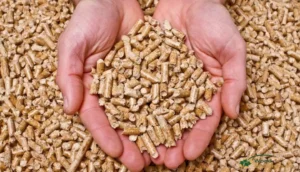
Where to order biomass wood pellets for sale in the UK and Europe?
We supply biomass wood pellets in tonne pallets and full truckloads across the UK and Europe, with ENplus A1, DINplus, and softwood grades held in stock.
Cambridgeshire Straw Pellets Limited was incorporated in 2009 under registration number 06928341. From our base in the East of England, we dispatch pallets nationwide — from London and the Home Counties to Scotland and Northern Ireland — and arrange full loads into France, Belgium, the Netherlands, and Germany. French-speaking customers can browse our boutique en ligne or read our guide to acheter des granulés de bois en gros.
Pellets are one product within a wider range. Many heating customers also take RUF briquettes or Pini Kay briquettes for open stoves, kiln-dried oak firewood for the living room, and wood pellets for BBQ smokers in summer. Browse the full shop or visit our blog for further buying and storage guides.
What would a full truck of pellets replace in your fuel budget this winter? Send us your annual kWh figure or litres of oil, and we will convert it into tonnes for you.
How can I open a wholesale or bulk trade account with Cambridgeshire Straw Pellets Limited?
Commercial biomass operators, agricultural merchants, equestrian centres, and domestic buying syndicates can contact our bulk supply team directly with their postcode and required tonnage to receive a custom delivered quote by pallet or full articulated truckload.
Are biomass wood pellets carbon neutral?
Pellets are classified as a renewable fuel because the carbon released on burning was originally absorbed by the growing tree. They are not zero-carbon once harvesting, drying, and transport are included. Supply-chain emissions are lowest when pellets are made from local sawmill residues, which is why Ofgem’s Biomass Suppliers List applies lifecycle greenhouse gas limits to all qualifying suppliers.
What is the difference between wood pellets and straw pellets?
Wood pellets have lower ash content (under 0.7 per cent for A1 grade) and higher heat output per kilogram. Straw pellets carry more ash and are more commonly used for animal bedding than for heating. Our detailed straw pellets vs wood pellets comparison covers both in full.
Can I burn biomass wood pellets in a log burner?
Not in a standard log burner. Pellets require a controlled air supply and a burn pot, or a purpose-made pellet basket. Burning loose pellets on an open grate wastes fuel and can damage the appliance. For log burners, use briquettes or kiln-dried firewood instead.
How many pellets does a house use per year?
A well-insulated three-bedroom home with a 15 kW pellet boiler typically burns 3 to 5 tonnes per heating season. Larger or older properties will use more. Our calculators on daily stove consumption and bag duration can help you estimate your own figure.
Do wood pellets go off?
Dry pellets stored in sealed bags keep for years. Once exposed to damp air, they absorb moisture, lose durability, and eventually crumble. Keep them under cover, off the floor, and in their original packaging until needed.
Are biomass wood pellets cheaper than oil or gas?
On a pence-per-kWh basis, pellets have historically sat between mains gas and heating oil, though the gap shifts with energy markets. Bulk and truckload buying narrows the cost further. Check our live pricing pages or request a quote for a current comparison.
What size pellet do I need — 6 mm or 8 mm?
Most domestic stoves and boilers sold in the UK and western Europe use 6 mm pellets. Some larger commercial boilers and older Scandinavian units take 8 mm. Check your appliance manual before ordering.
Verified industry references and further reading
- International Energy Agency global data on solid biofuels and modern renewable heat: International Energy Agency bioenergy report
- Official ISO 17225 Part 2 pellet quality parameters and testing thresholds: ENplus official quality certification scheme
- United Kingdom official forestry production, timber residue, and woodfuel trade figures: Forest Research UK timber and woodfuel statistics
- UK Government lifecycle carbon accounting and net zero framework for solid biomass: Department for Energy Security and Net Zero biomass strategy
- European solid biofuel production capacities and residential pellet market data: Bioenergy Europe statistical pellet report
- Domestic heat demand benchmarks and biomass boiler efficiency compliance: Ofgem Domestic Renewable Heat Incentive and boiler guidance
- British domestic solid biomass fuel quality assurance and Woodsure Ready to Burn standards: Woodsure UK biomass fuel certification authority
- ENplus certification scheme, ENplus Handbook version 3.0, pellet quality requirements: https://enplus-pellets.eu/
- Bioenergy Europe, Statistical Report and Pellet Report (European production and consumption): https://bioenergyeurope.org/
- International Organisation for Standardisation, ISO 17225 Part 2, Solid biofuels — graded wood pellets: https://www.iso.org/
- Forest Research (UK), Forestry Statistics, wood pellet production and trade: https://www.forestresearch.gov.uk/
- Department for Environment, Food and Rural Affairs, Air Quality (Domestic Solid Fuels Standards) (England) Regulations 2020: https://www.gov.uk/government/organisations/department-for-environment-food-rural-affairs
- HETAS, Ready to Burn and solid fuel appliance guidance: https://www.hetas.co.uk/
- IEA Bioenergy, safety and self-heating guidance for stored wood pellets: https://www.ieabioenergy.com/